
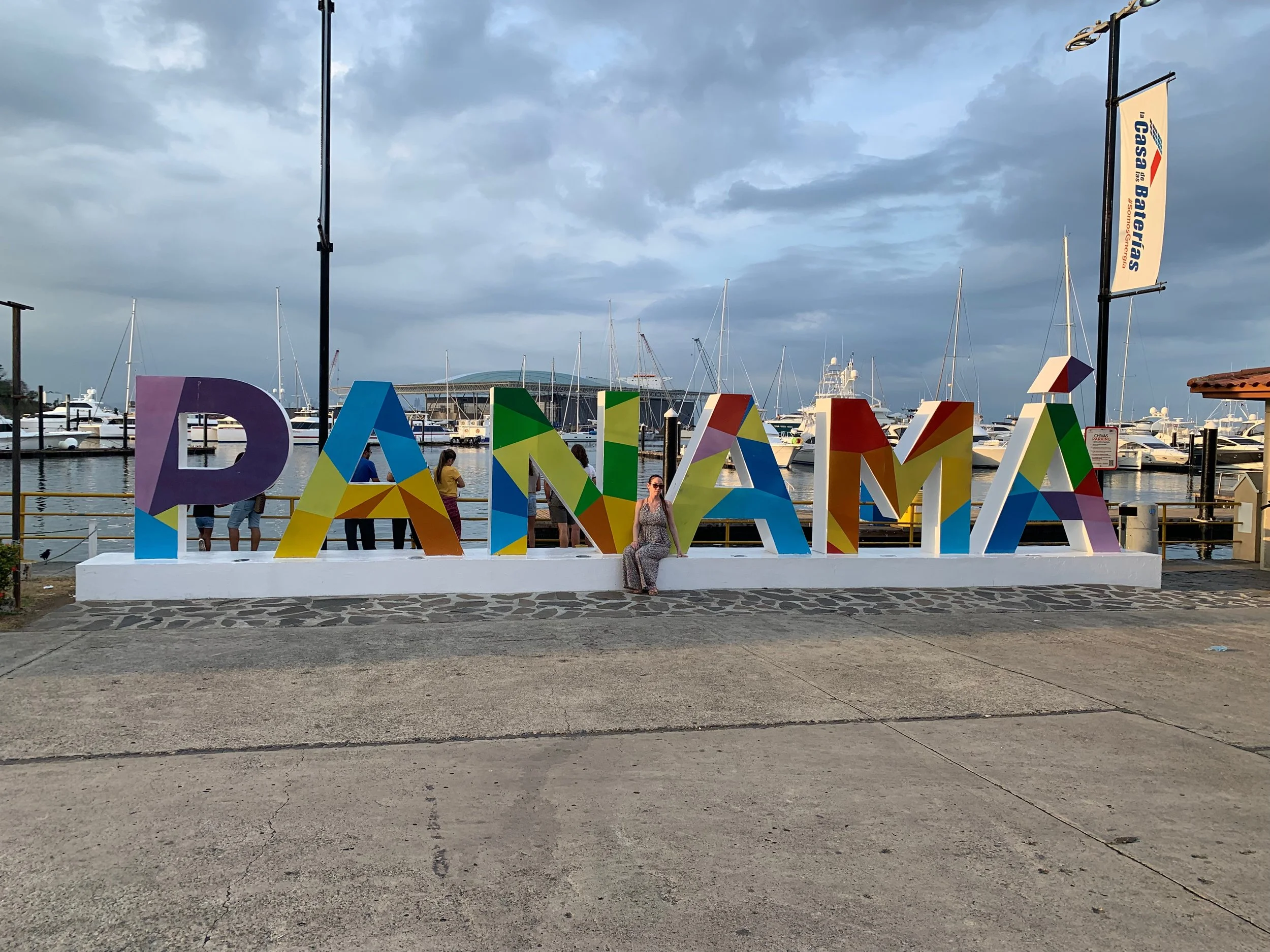
Panama
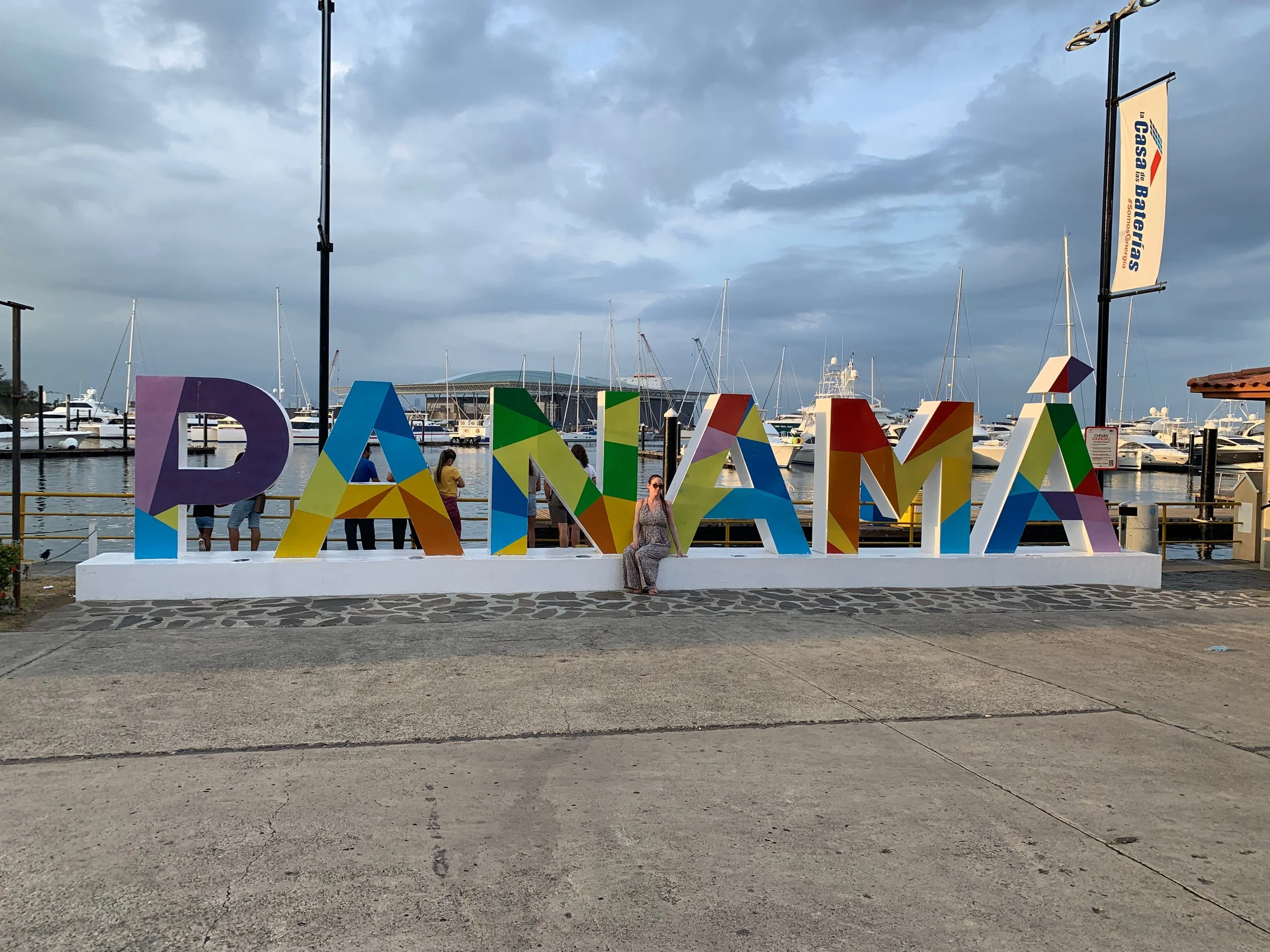
A tourist posing in Panama City
We decided to head to Panama for spring break for a few reasons. First, it was an easy five-hour nonstop flight from New York for only $400 per person. Second, it was warm in March, and supposed to be the dry season. Finally, we wanted to bring our son and our nephew to the place where their grandfather had served two years in the U.S. Army in the 1960’s. Grandpa had told countless stories about his army days, and both boys wore his dog tags around their necks every day. We thought that homebound Grandpa would get a kick out of the photos and videos we figured we could send from his old army base.
We had eight nights to work with. The first night we stayed in Panama City, then flew to the Bocas del Toro for the next five nights to stay at an ecolodge recommended by some friends. Our last two nights were in the Casco Viejo, the old colonial section of Panama City. We figured this would be a good balance of city and beach, with a bit of jungle thrown in.
So what did we think of Panama? The pros were: inexpensive, friendly people, a few very good meals, spending time with school children, visiting an area of geographical and historical interest (the Canal Zone), exploring Grandpa’s old army base (now-turned recreation area), and our time in the Casco Viejo. The cons were: uncooperative weather, disappointment with Casa Cayuco and the Bocas del Toro in general, and a bit of boredom. In a nutshell, I think Panama City is a place well worth spending a weekend, whether as a stopover or a destination. I would return to Casco Viejo just to eat a meal again at Lo Que Hay. As far as beach and jungle time go, I preferred our trips to Costa Rica and Belize. If you are someone who really enjoys a rustic ecolodge, then the Bocas del Toro may be for you.
Panama City
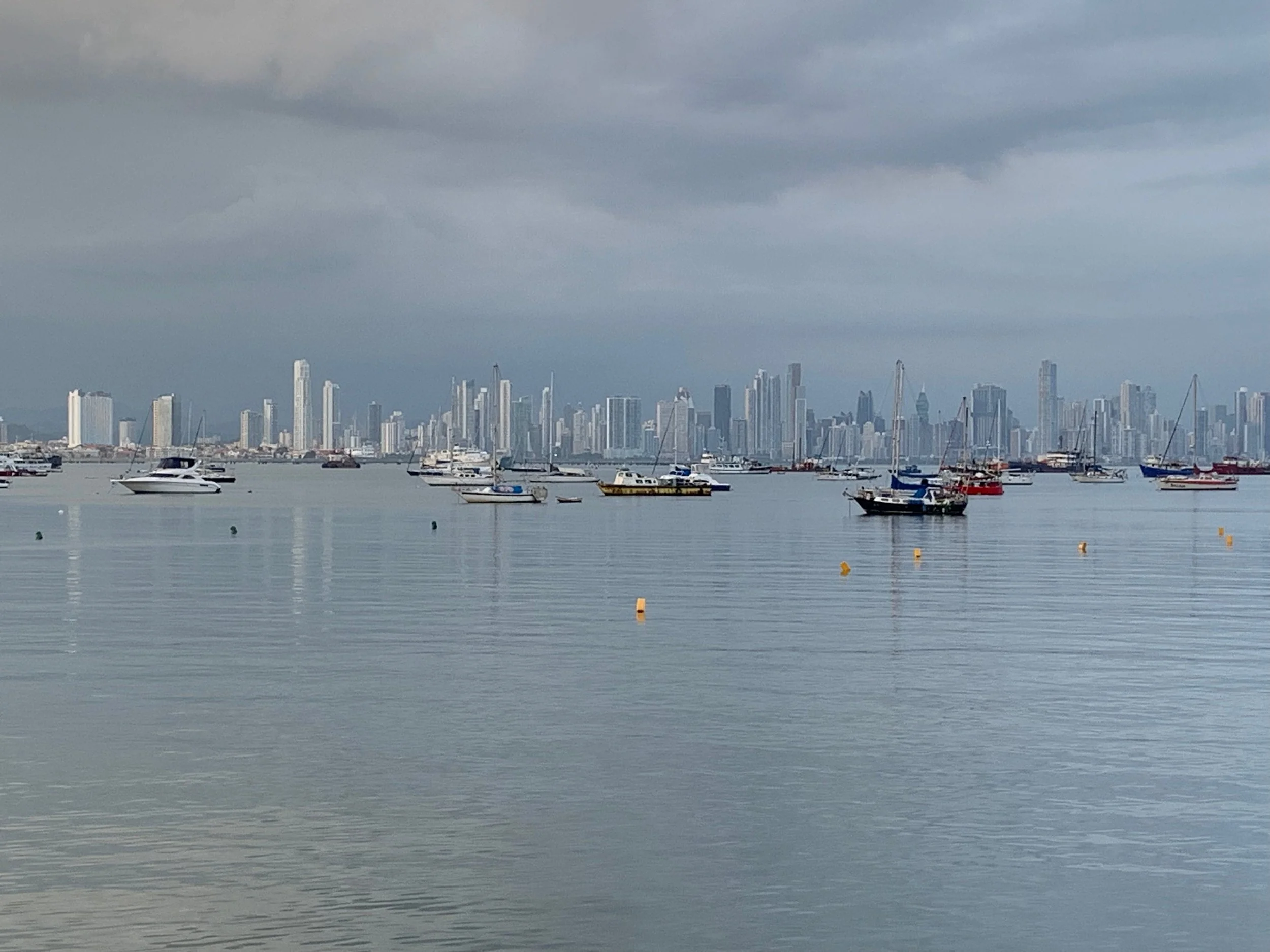
Panama City’s skyline from the Amador causeway
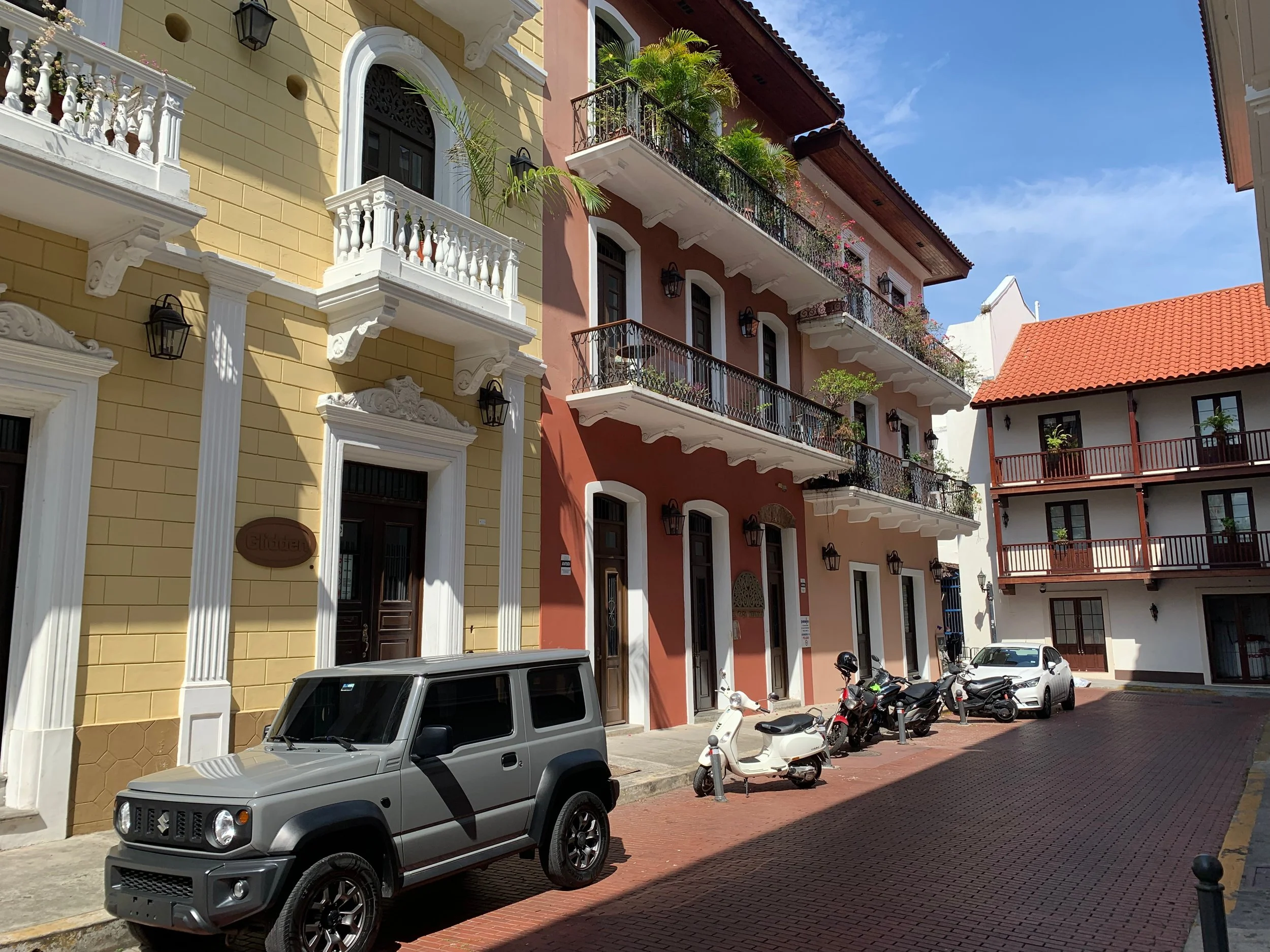
Panama City’s Casco Viejo, or old town
Panama City is a contrast of the modern, commercial skyscrapers of downtown and the restored colonial homes in the Casco Viejo. There are also miles and miles of pedestrian and bike paths along the harbor and out along the causeways, offering both the chance for recreation and for observing the city from different perspectives. Having two teenagers with us, we explored most of these pathways by electric scooters and bikes, which are easy to rent.
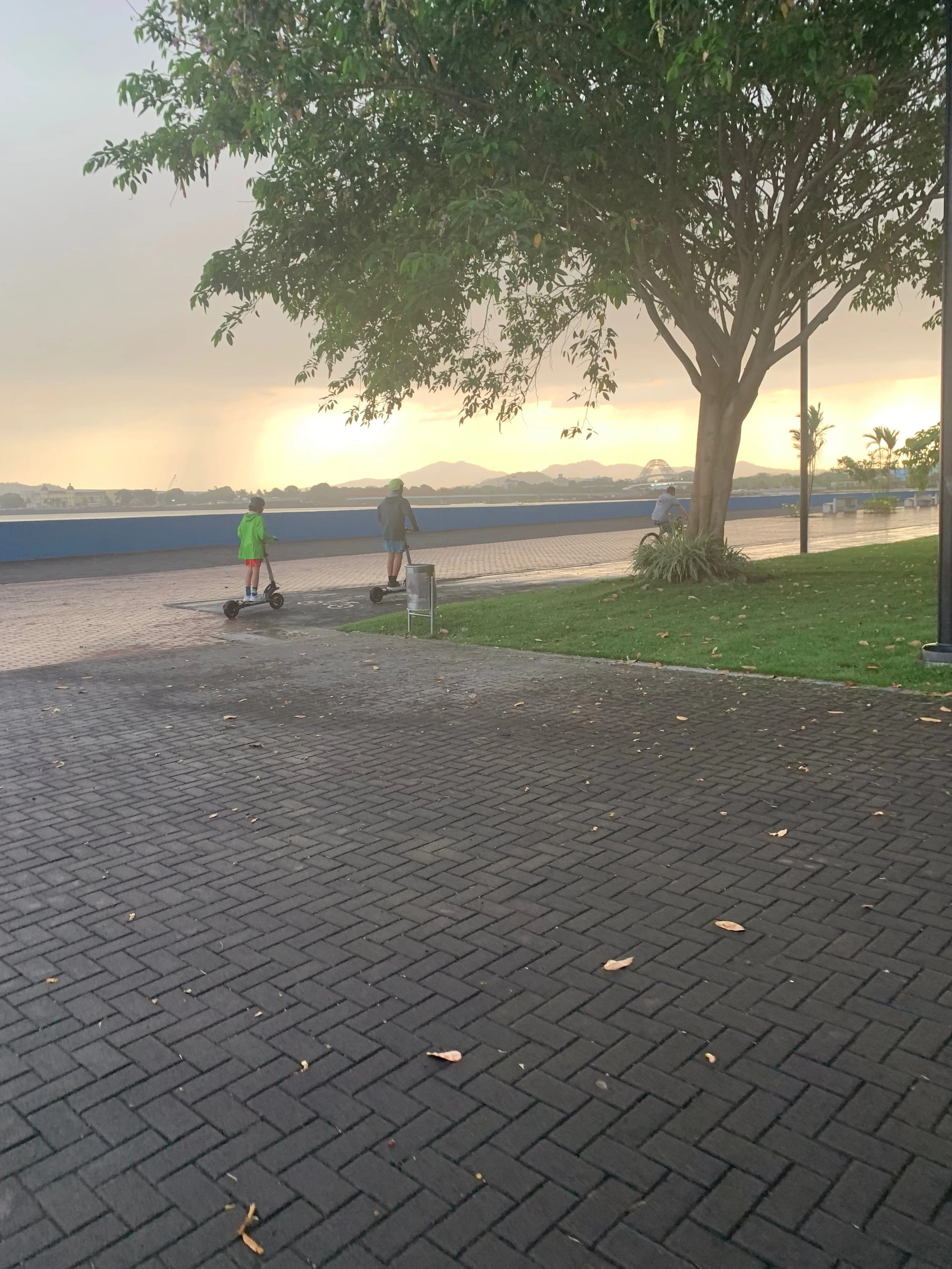
Panama City offers miles of paved pathways along the coast
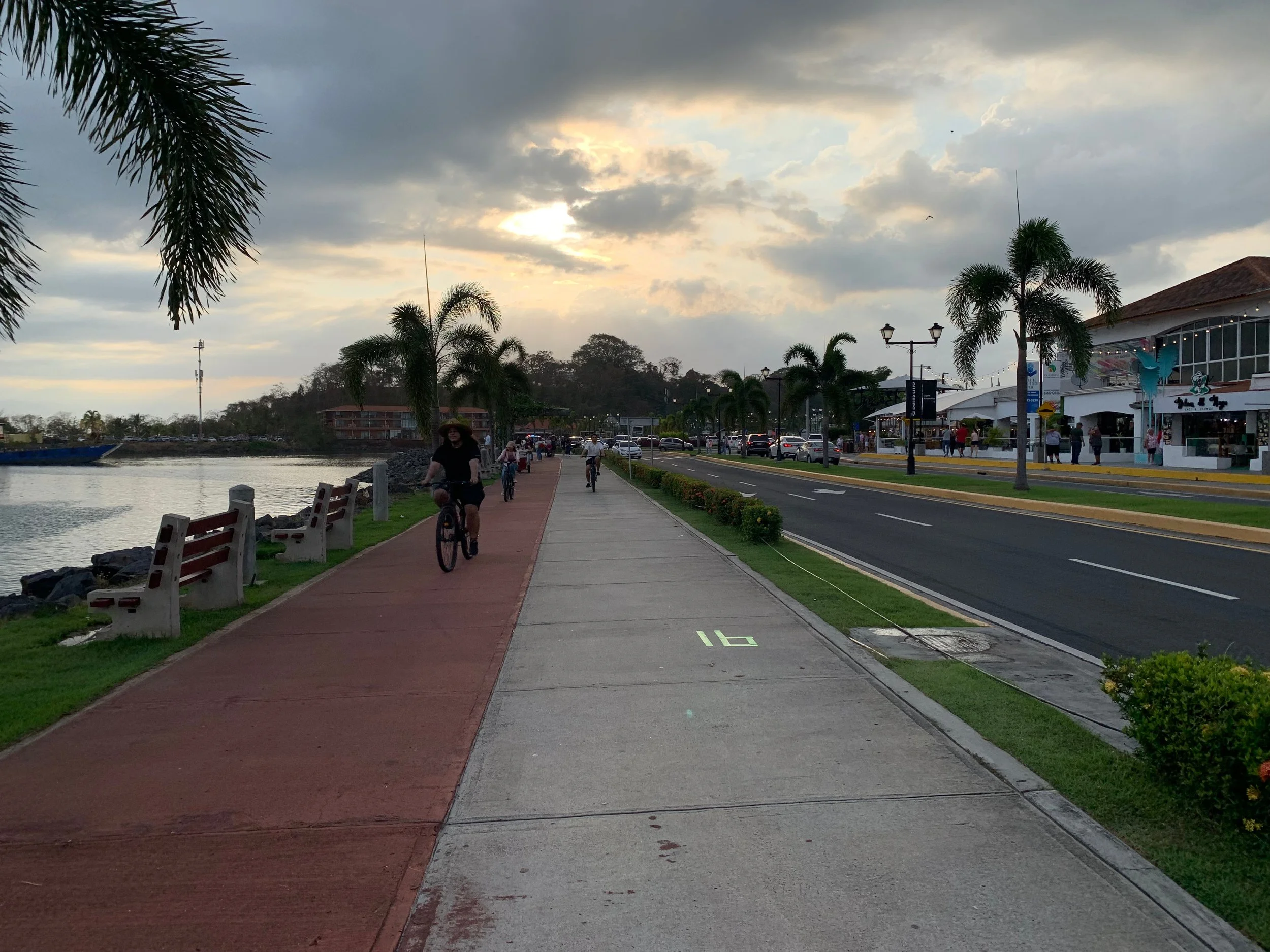
My dad’s old army base, Amador, was turned into a recreation area after the 1999 handover of the Canal Zone to the Panamanians
After we rented our bikes and scooters, we headed out to where we thought my dad’s old army base was, but had trouble finding it. Interestingly, when we stopped to ask locals where Fort Amador was, they were all confused. Even the police officers seemed to have no idea that there was a U.S. Army base in this area. Perhaps we were asking the wrong generation. After lots of exploring and getting lost, we found an area of abandoned, graffiti-covered buildings that appeared to be the old army barracks. We took lots of photos and sent them home to my dad, who remarked, “doesn’t look very nice.” He could not recognize whether any of the buildings was his old barracks.
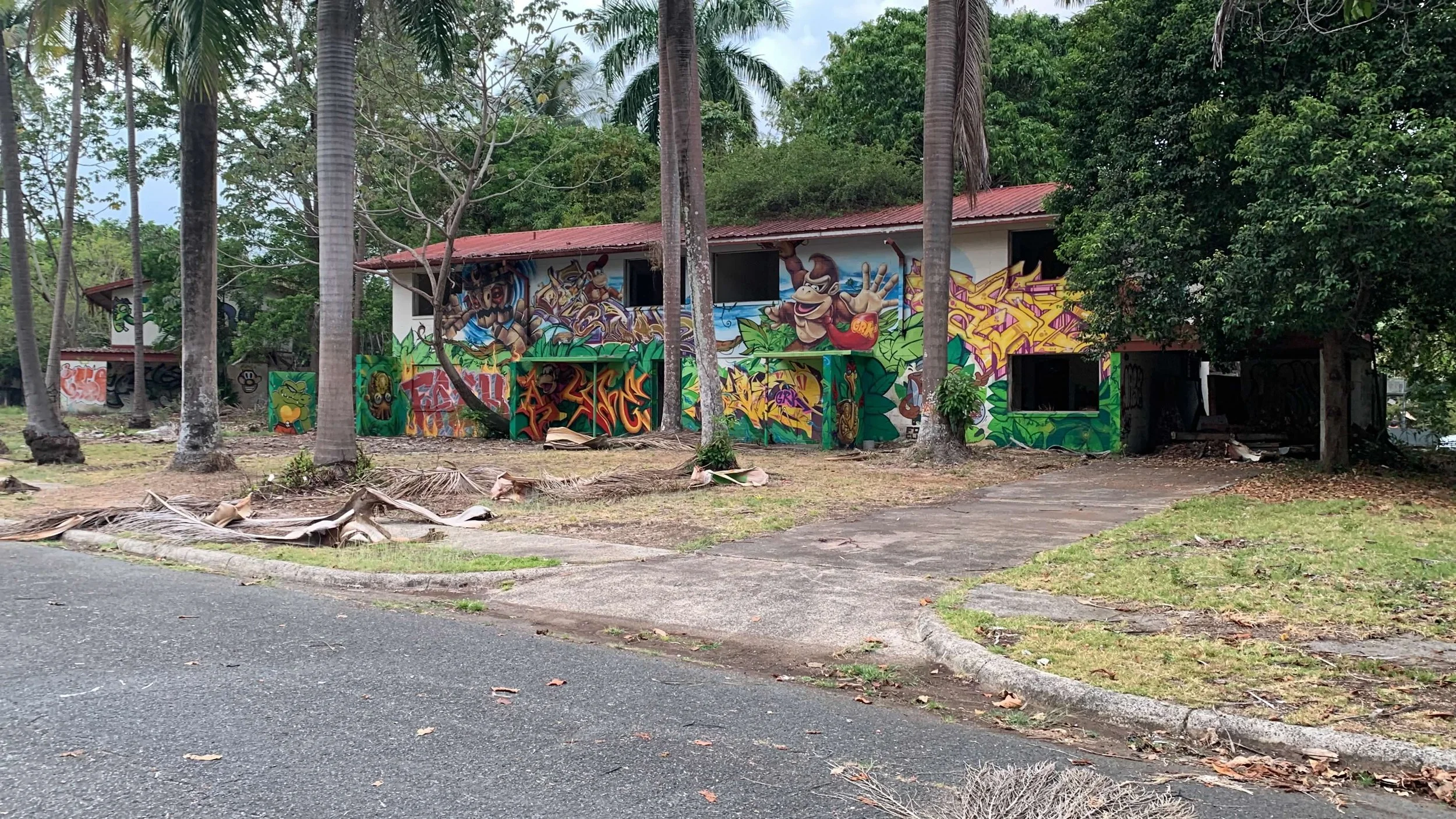
Old U.S. Army barracks in the former Canal Zone
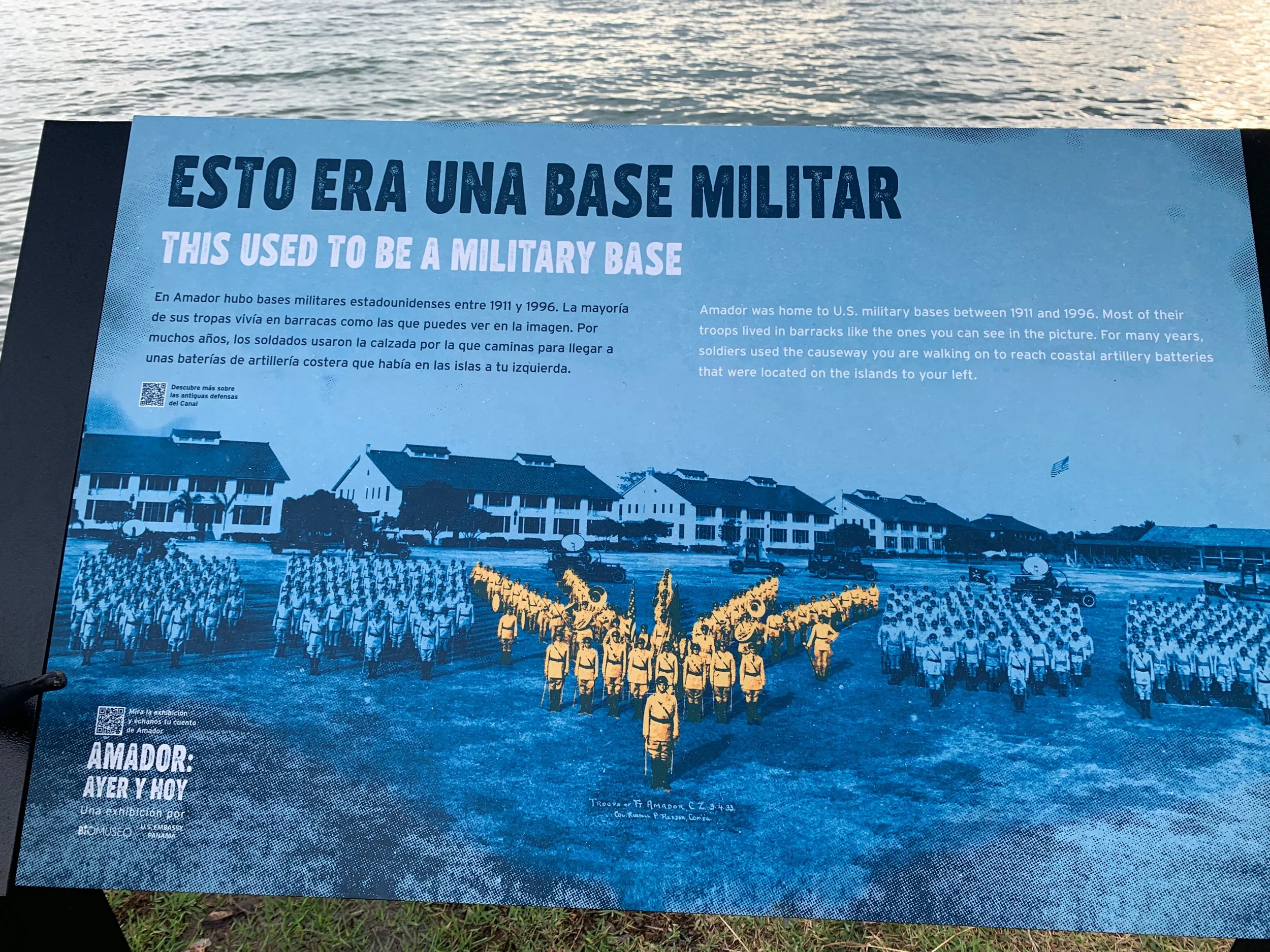
Moving along, we headed out on the Amador causeway, a peninsula of land that stretches about 3.7 miles out to four islands on the Pacific Ocean side of the canal. There were local families strolling the causeway, getting a bite to eat and enjoying a Sunday afternoon. The views were lovely, but we were after learning about the old army base. We asked a few more locals along the causeway if they knew anything about the old army base that was here, but everyone seemed focused on the present: enjoying their ice cream cones on the coastal pathway that now belonged to them, the Panamanians. Fortunately, all history was not lost because there were signs describing Amador when it served as a U.S. Army base. We stopped to photograph each of them to share with my dad, and to try to imagine his life there in the 60’s.
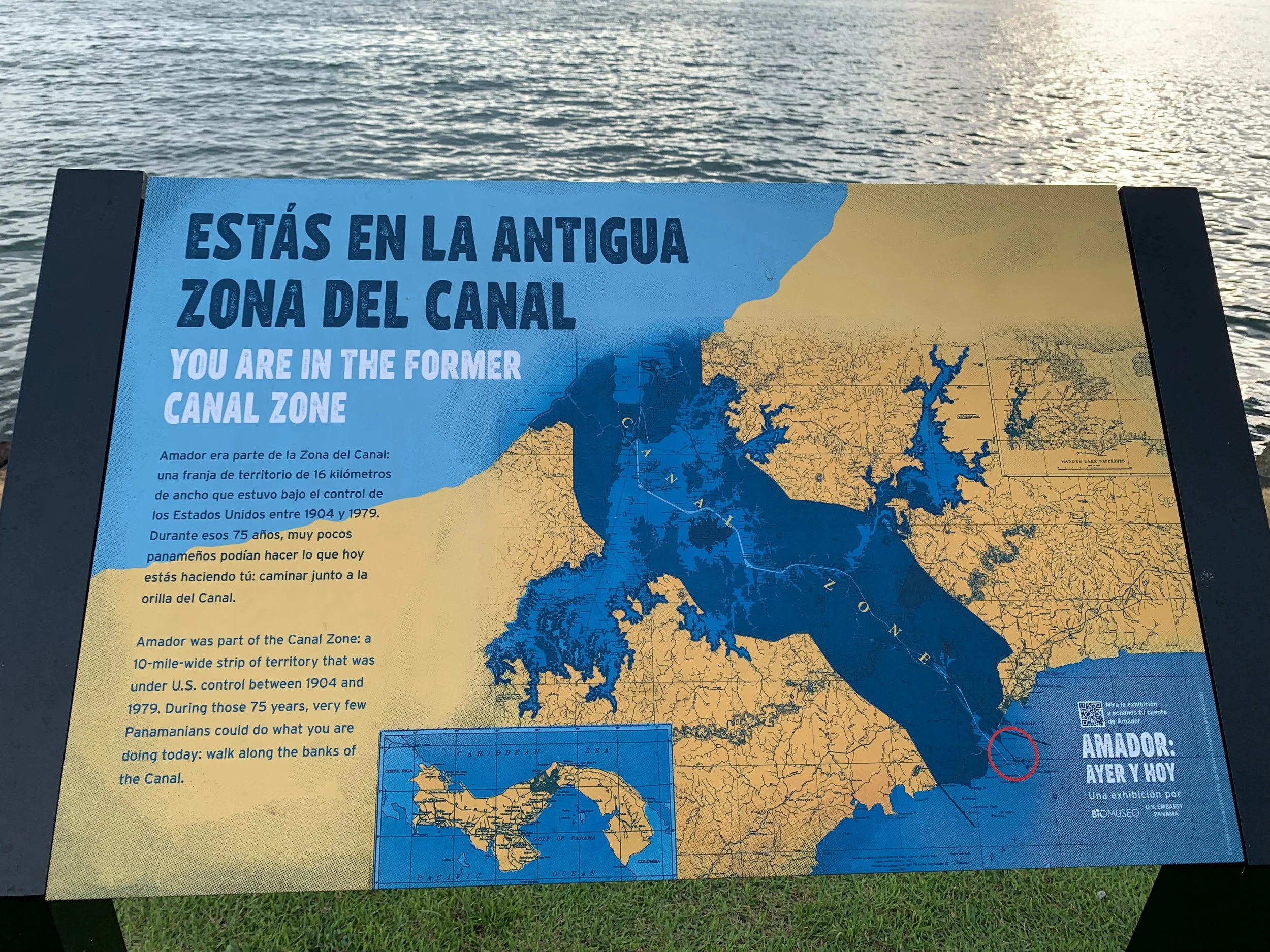
It was not until we hired a driver, Eric, to take us out of the city to go ziplining in the Gamboa Rainforest that we understood more about the context of the Canal Zone. For Panamanians, the Canal Zone, land located in their city, was land controlled by foreigners - land that should be theirs. For a student of diplomatic history and international human rights law, you’d think I would have considered this point of view before. The Americans had been colonists, and reaped the economic benefit of collecting millions of dollars in fees from ships that passed through the Canal. Eric stopped to show us the monuments to the high school students who, on January 9, 1964, had attempted to fly the Panamanian flag next to the U.S. flag at their school in the Canal Zone. Reports range from those that state American students ripped the Panamanian flag to shreds to those that state those students were shot dead by American soldiers. Over the following three days, protests against U.S. sovereignty in the Canal Zone escalated, resulting in the deaths of 21 Panamanians and four U.S. soldiers. Panamanians credit the events of January 9, 1964 as the catalyst for the treaty renegotiations that eventually handed control of the Canal Zone back to the Panamanians.
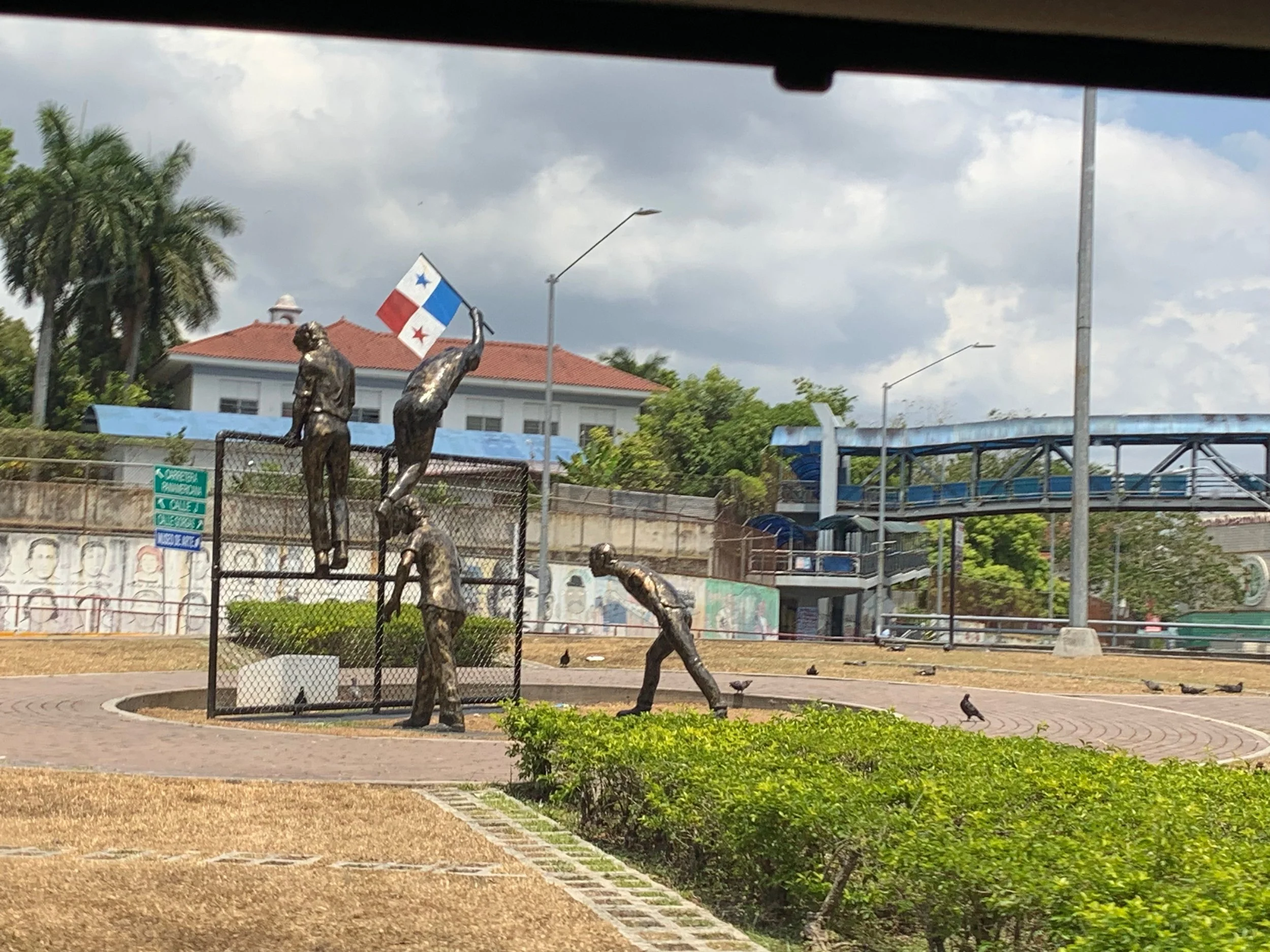
A monument to the teenagers who attempted to fly the Panamanian flag at their school inside the Canal Zone
And of course, we visited the Canal itself, where ships pay anywhere from hundreds of dollars to hundreds of thousands of dollars to pass between the Atlantic and Pacific Oceans without having to navigate the southern tip of South America. The idea of the Canal is geographically fascinating, but standing there watching ships go through one of the locks along the Canal was not fascinating. I thought viewing the Canal from the air, which we caught on our way to Bocas del Toro, was much more interesting. If you are an engineer or ship captain or something along those lines, you probably would enjoy the Canal visit. My mom and brother navigated the Canal on a boat years ago, which took all day, and thought it was “hot and boring.” I guess it runs in the family.
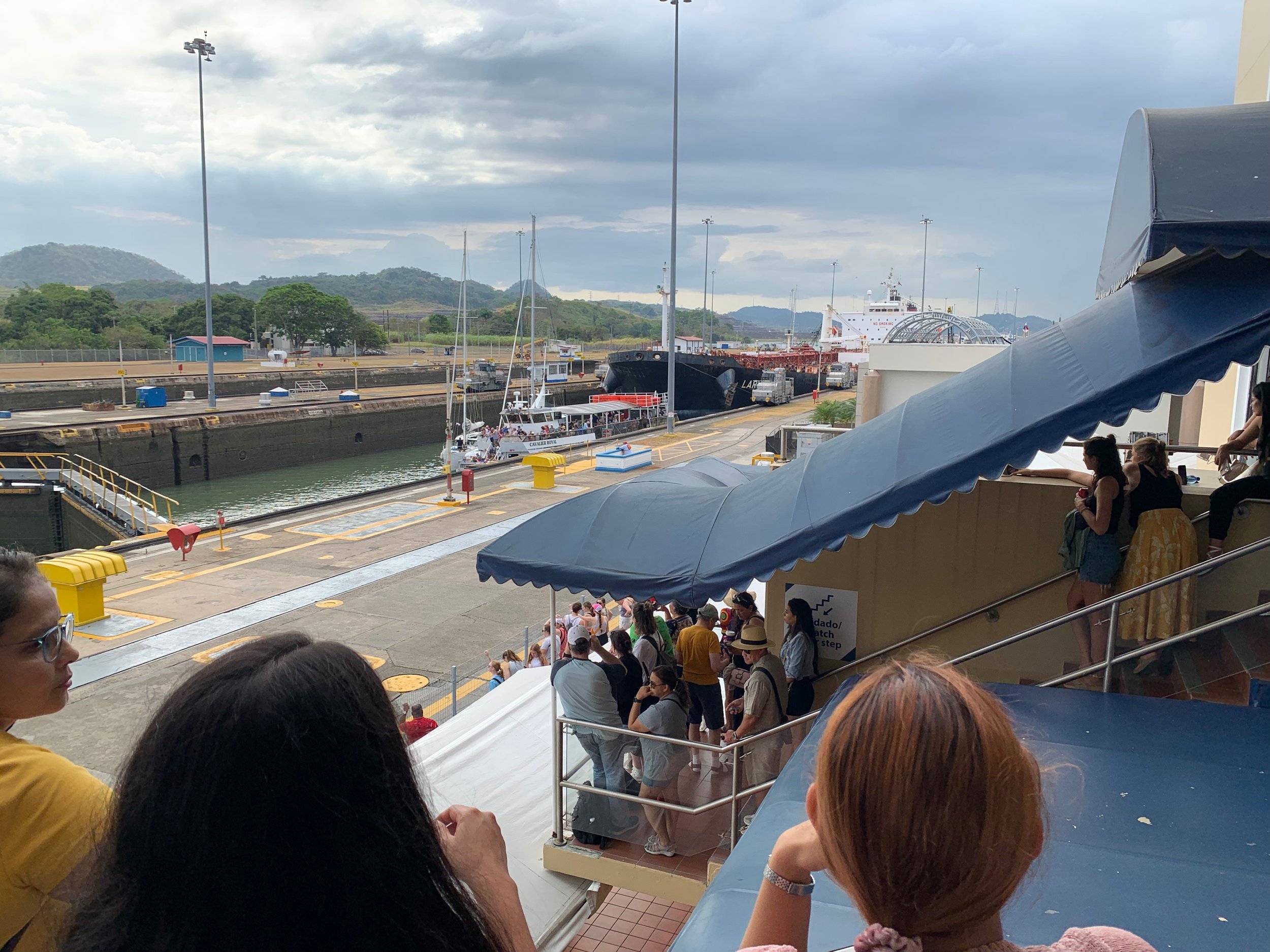
Miraflores Visitors Center at the Panama Canal
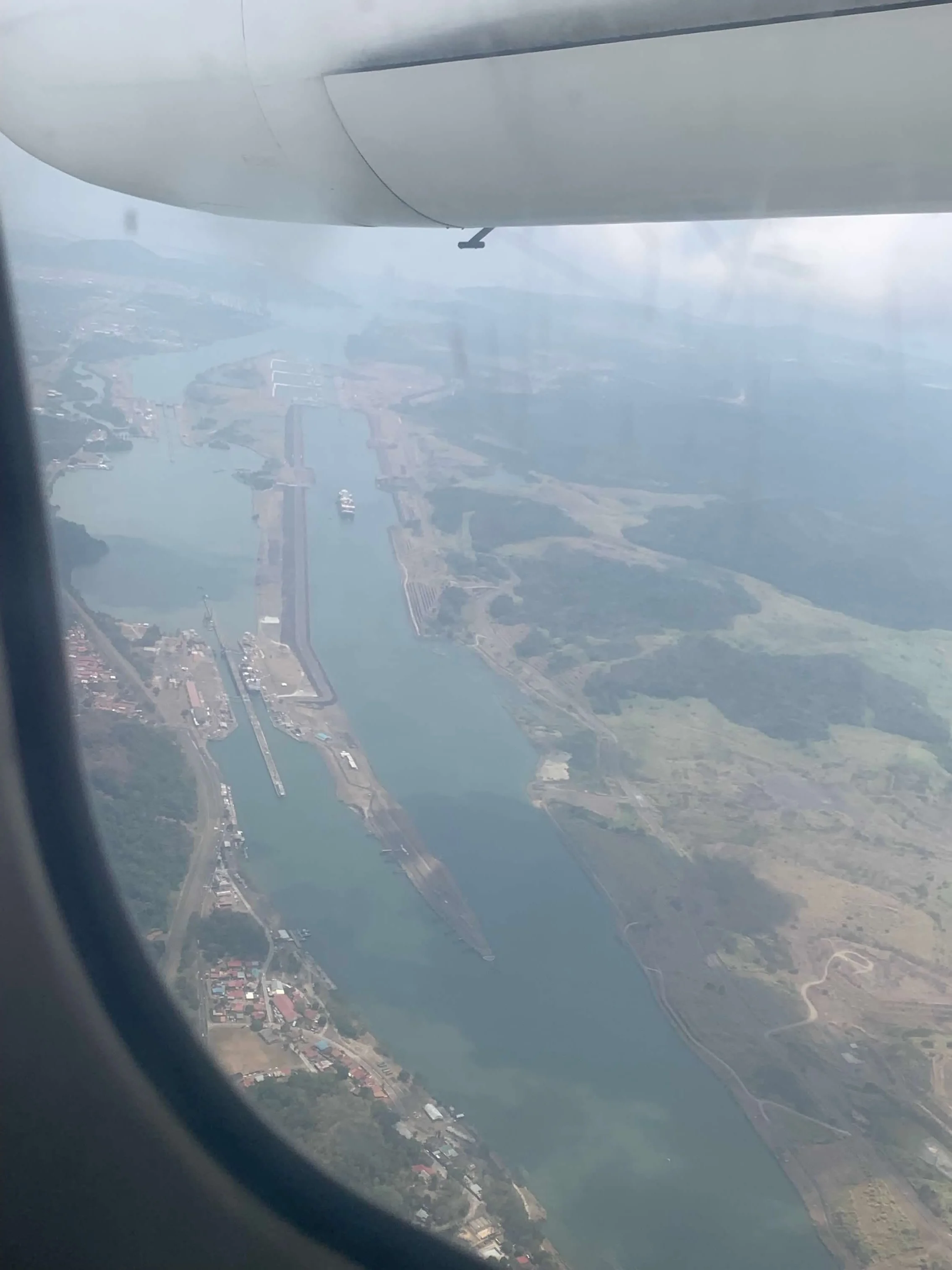
The Panama Canal from our airplane window
We loved exploring the Casco Viejo, which is filled with beautiful, colorful homes and delicious restaurants, like Lo Que Hay. We wanted to bring something back for my dad, but the Cuban cigars sold in Panama City are banned by U.S. Customs. We settled on a Panama hat, which the boys took turns wearing until it landed on the head of their grandfather back home.
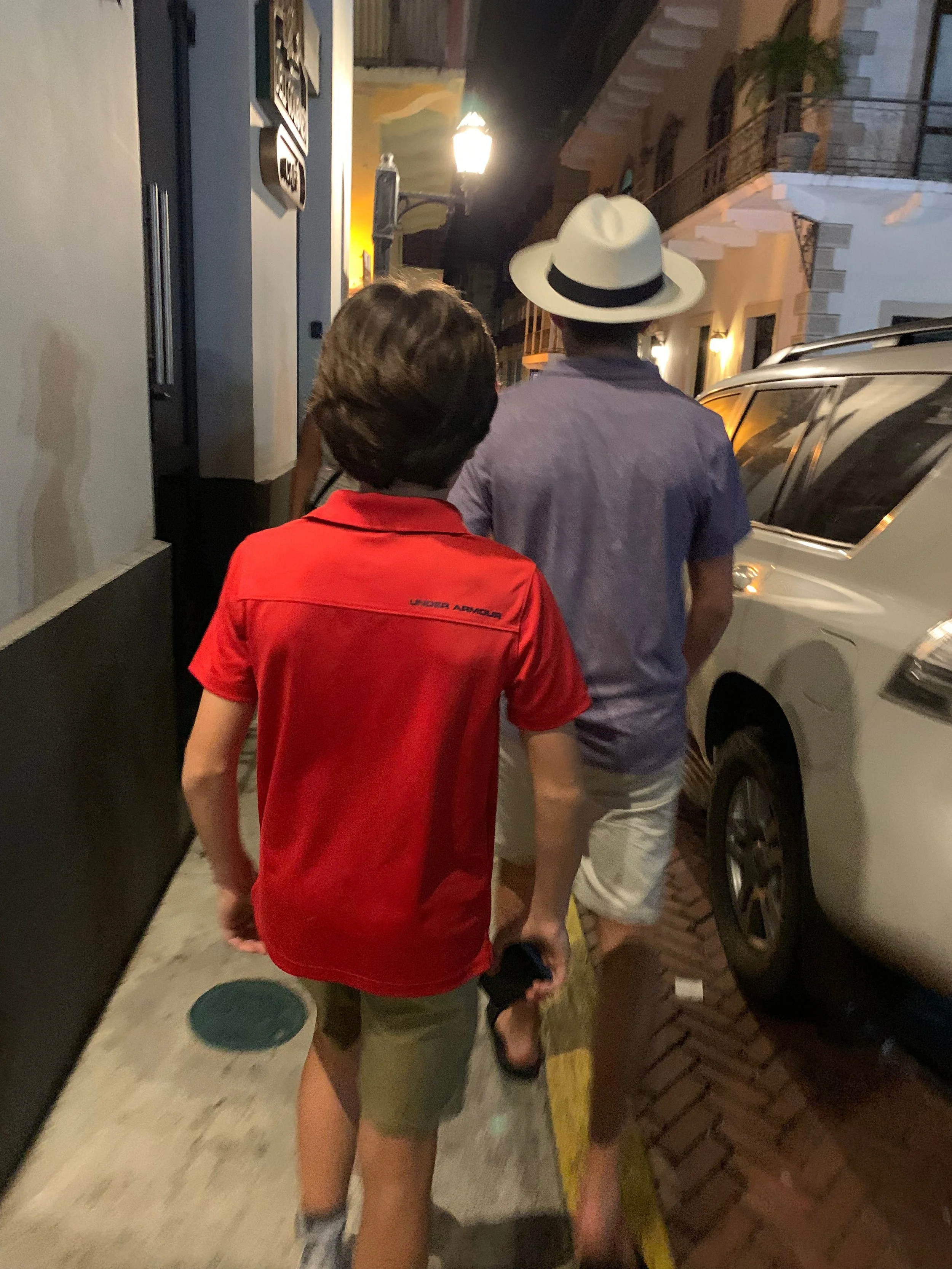
Ask the sales clerk to show you how to fold the hat properly and insert it into its travel box (take a video of the process with your phone so you don’t forget the steps!)
What to Do in Panama City
Rent scooters or bikes and ride along the coastal paths and Amador causeway.
Explore Casco Viejo’s cobblestone streets, lined with restored colonial homes, shops and restaurants.
Head to the Miraflores Visitors Center to learn about the history of the Canal.
Hire Eric from Hobby Pro Tour to teach you about the Panamanians’ view of the Canal and its history.
Consider a day trip out to Gamboa Rainforest to zip line and look for wildlife. For us, we had experienced better ziplining and wildlife viewing in Costa Rica, so we thought Gamboa was just okay.
Where to Stay and How to Get Around Panama City
Hands down, stay at Hotel La Coloñia, a Hyatt property that is gorgeous and well-located in the Casco Viejo.
If you want something less expensive and closer to the commercial part of the city, we spent a night at the Le Méridien, which was fine.
We mostly used Uber, which was inexpensive. We really appreciated having Eric from Hobby Pro Tour drive us out to Gamboa because we learned so much from him. I recommend hiring Eric for a private tour.
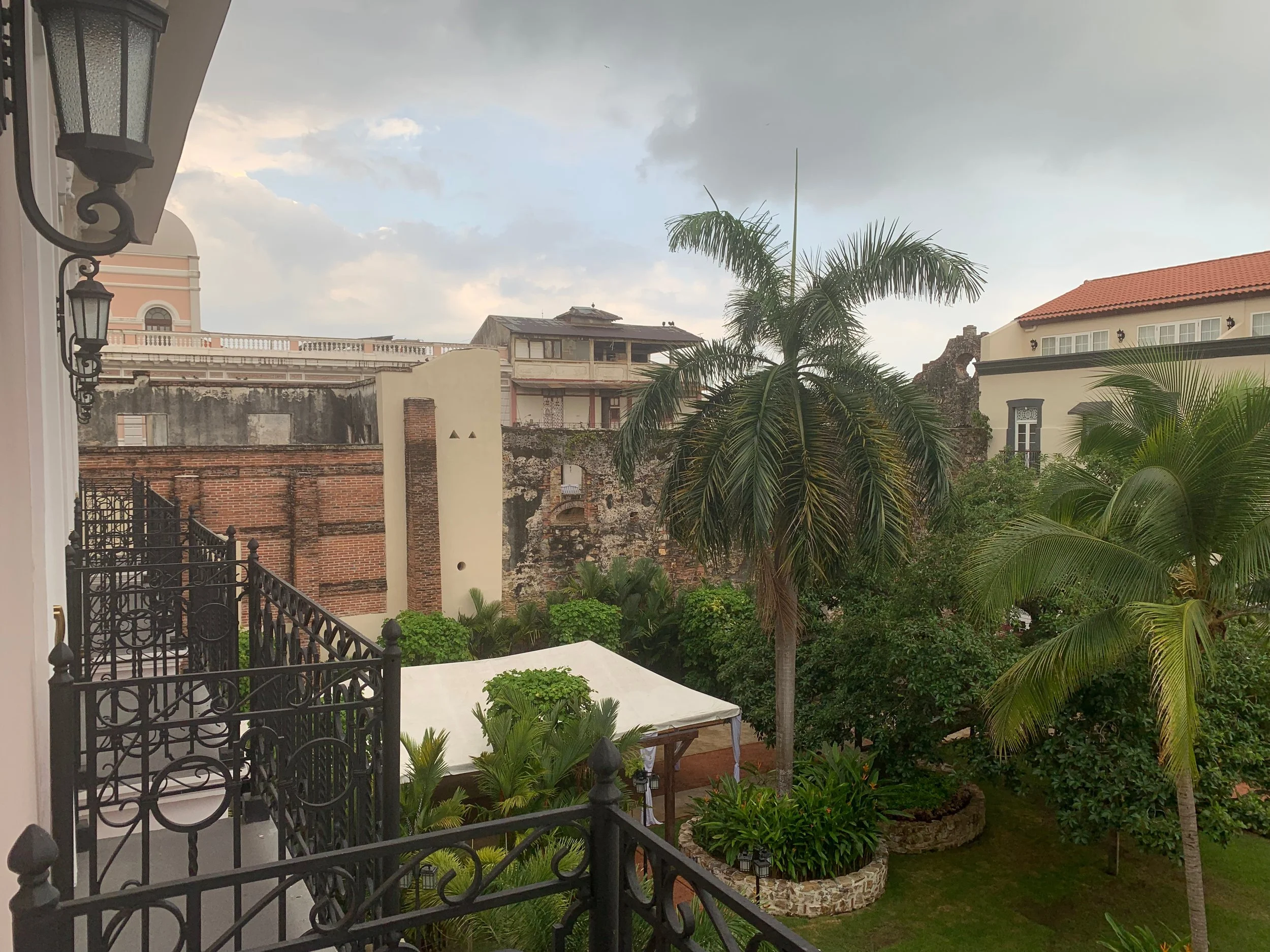
Hotel La Compañia’s courtyard from our balcony
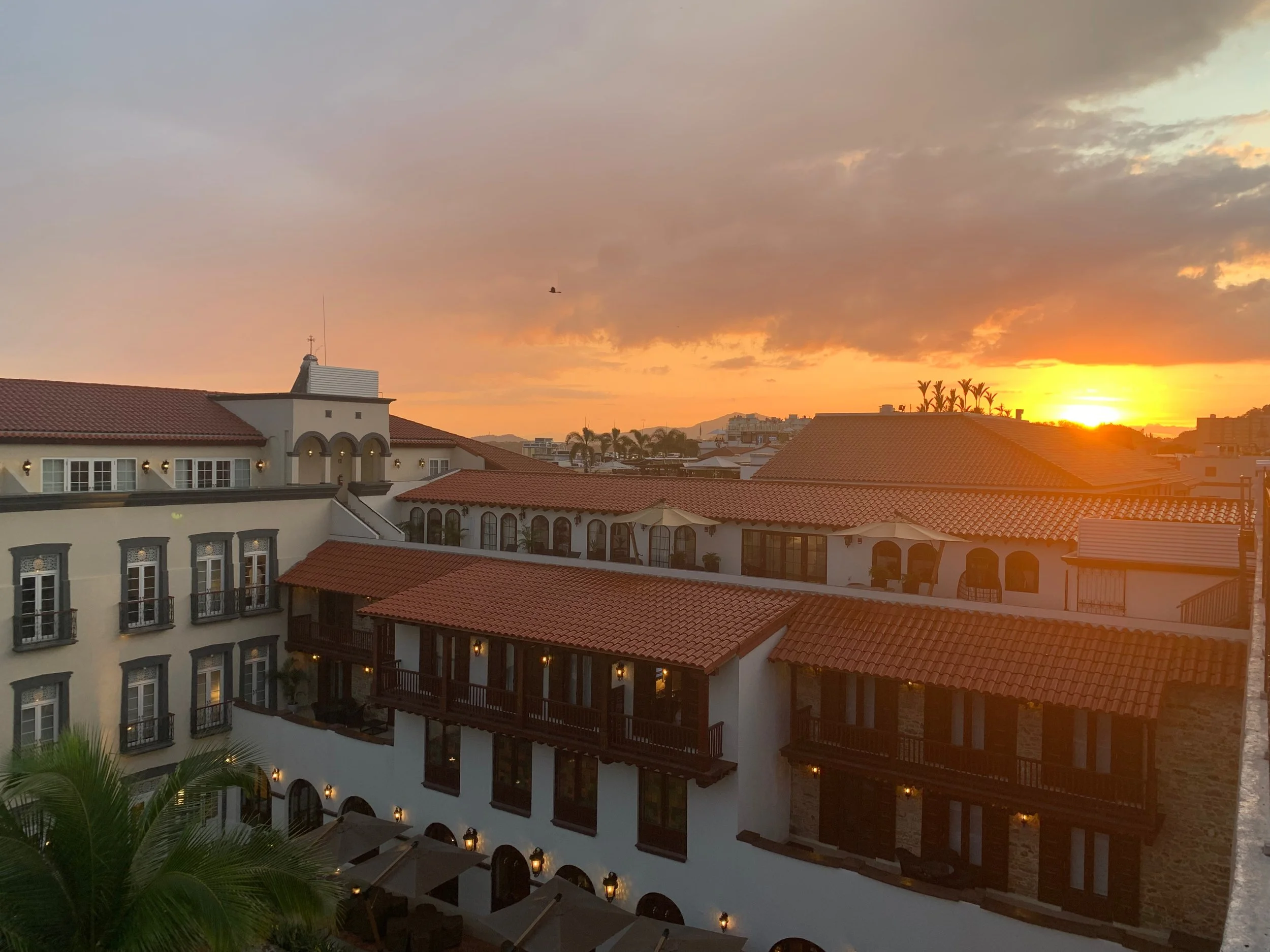
The view from our balcony at Hotel La Compañia at sunset
Where to Eat in Panama City
Fonda Lo Que Hay. We still talk about this meal two years later. My nephew says it is the best friend chicken he has ever tasted. It was well worth the 90-minute wait. My friends, Susan and Rob, dined here recently and were able to reserve a table in advance. Do that.
Azahar is a really nice restaurant located close to Le Meridien Hotel, on the seventh floor of a beautiful building. The boys loved their steak so much they asked to return for a second meal. (We did.) The desserts were also excellent. We reserved through What’s App.
Gauchos near Le Meridien Hotel. We landed hungry in Panama City, so after dropping off our bags, we took a left out of our hotel and stumbled upon Gauchos. We were the only customers and I am not sure why. The simply-prepared food was scrumptious.
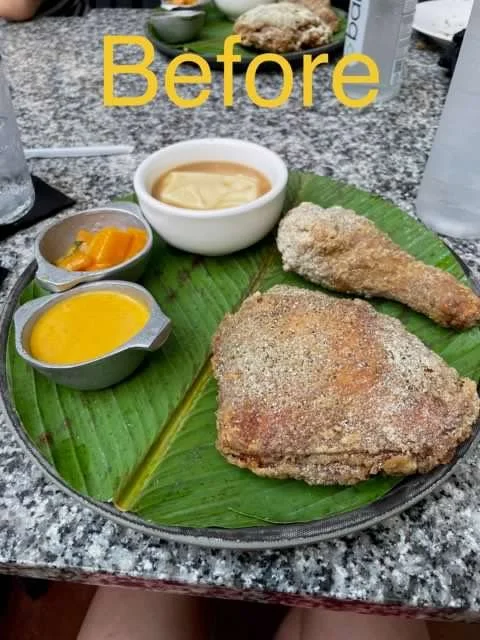
My nephew took “before” and “after” photos of his fried chicken - I’ll spare you the “after” photo of the bones
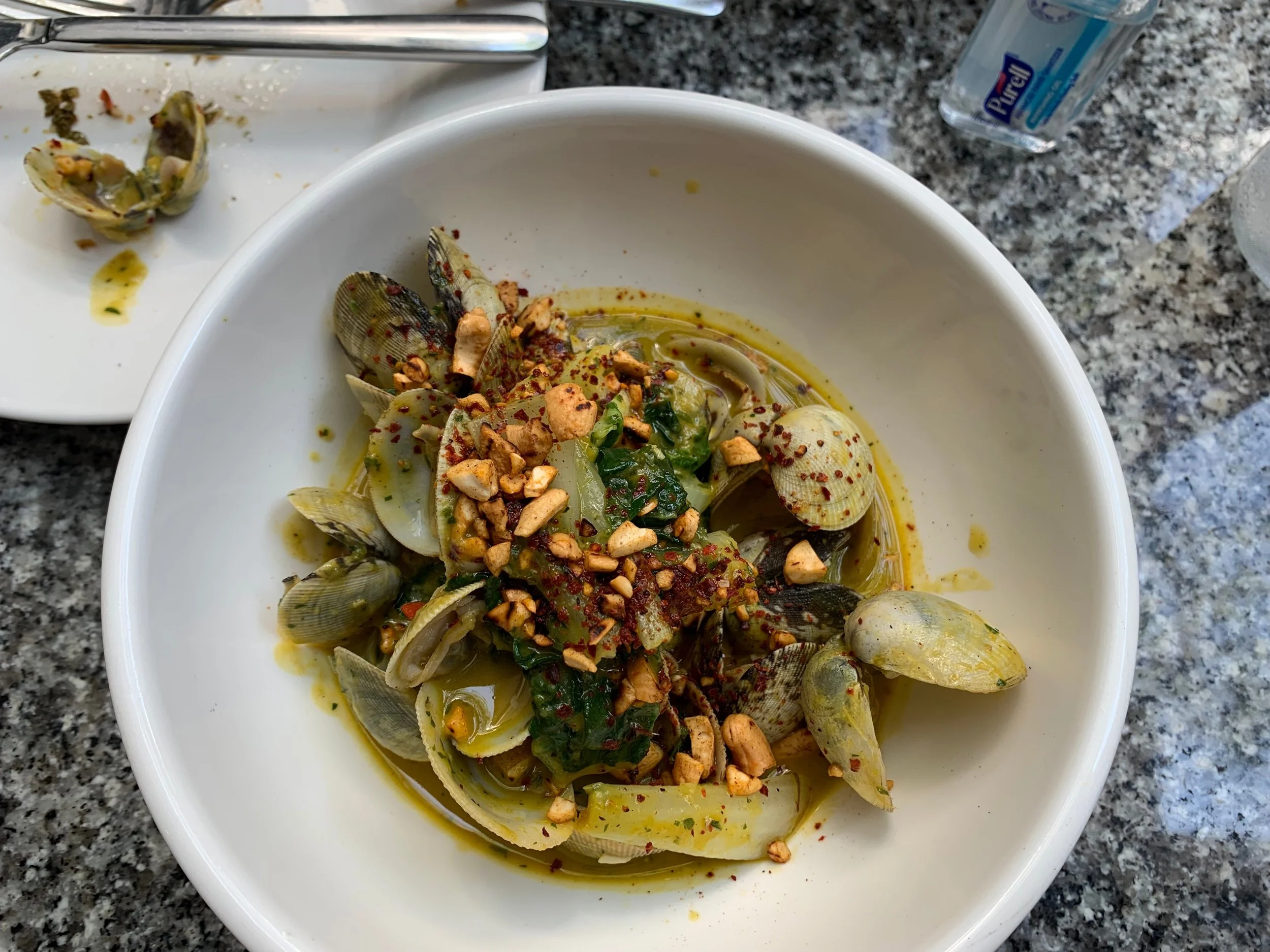
Outstanding clams dish at Lo Que Hay
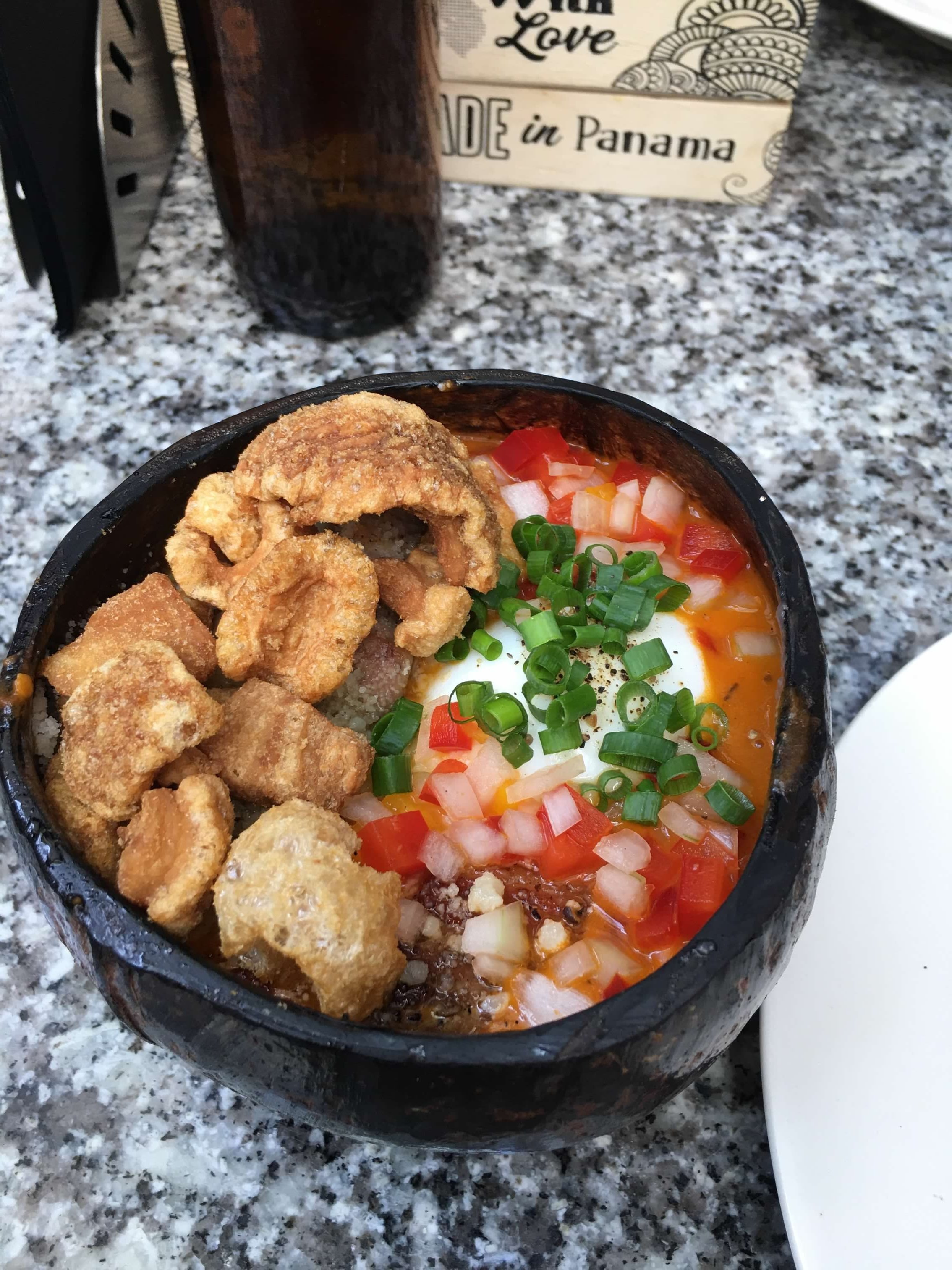
Pork Belly Guacho at Lo Que Hay
Bocas del Toro
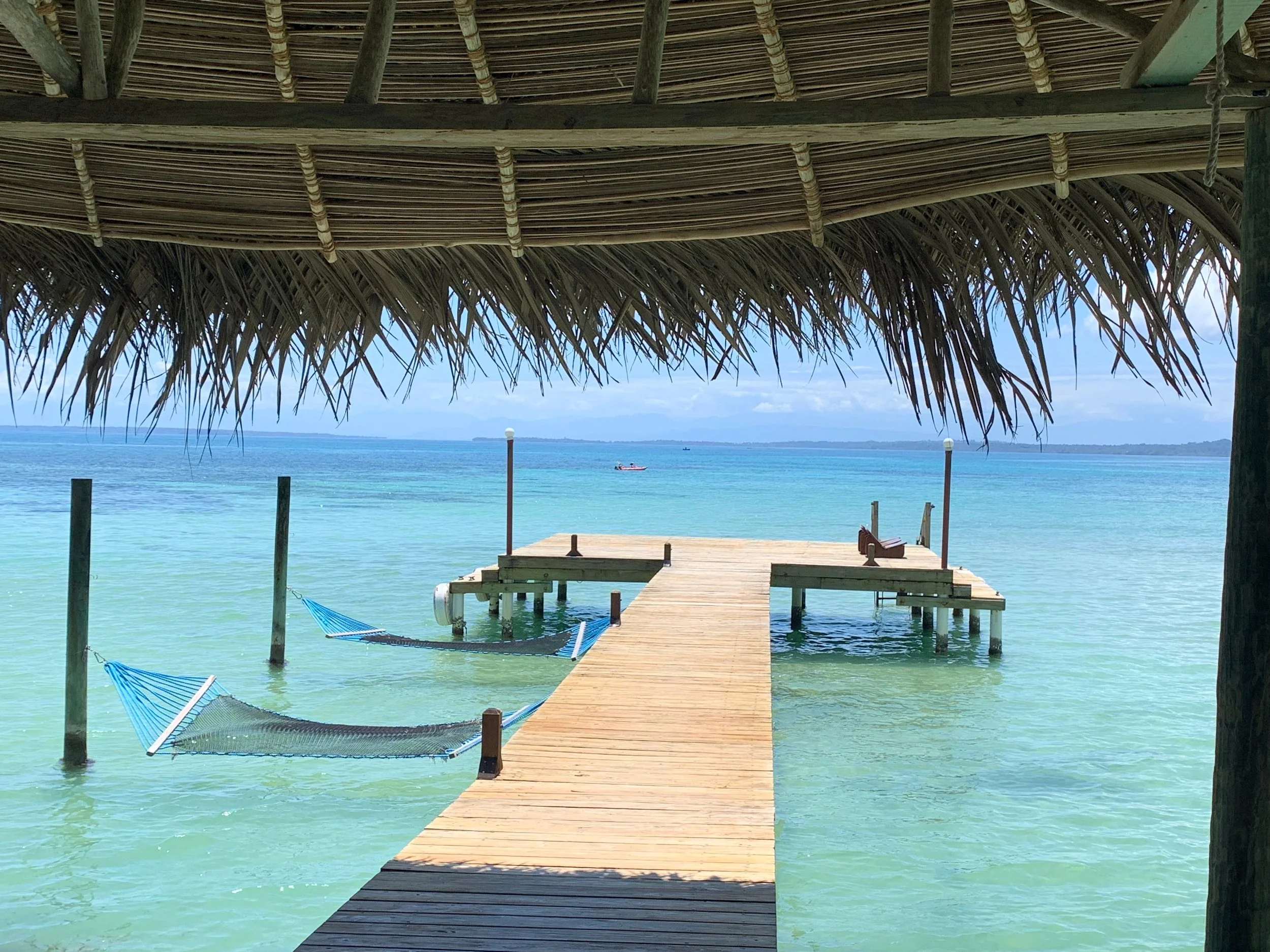
Casa Cayuco’s dock with water hammocks on our only sunny day
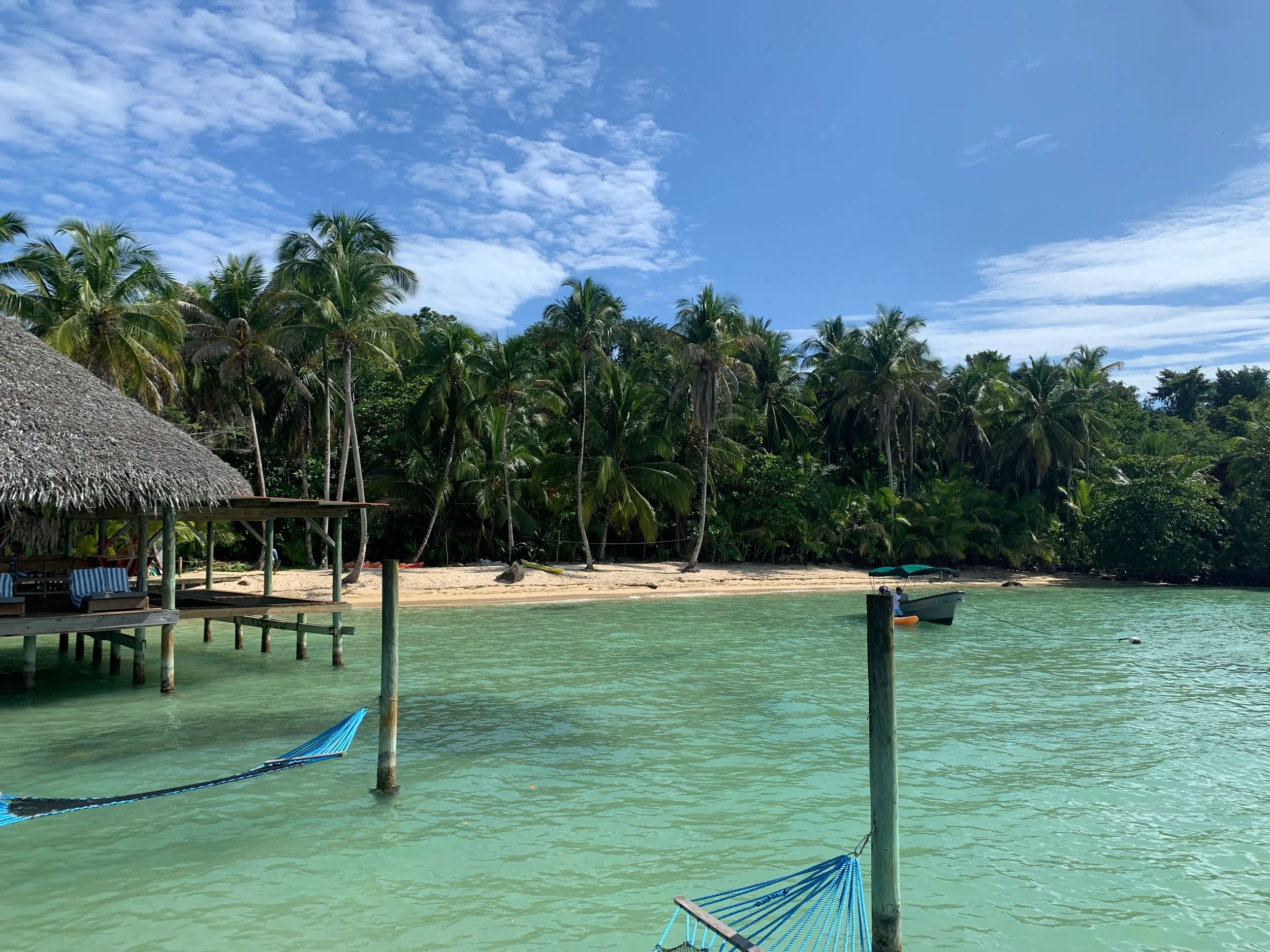
Casa Cayuco’s beach on our only sunny day
A one-hour flight on Air Panama from the smaller of Panama City’s two airports and we landed in Bocas del Toro, an area in the northeast of Panama encompassing both the mainland and a series of islands in the Caribbean Sea known for its biodiversity. Casa Cayuco, our ecolodge for the next five nights, picked us up at the airport and transferred us by boat to the lodge. We were warmly welcomed by the hotel’s manager and staff, and shown to our rustic cabin. We were not the only guests confused by the TripAdvisor reviews describing Casa Cayuco as a luxury ecolodge. We have stayed in luxury ecolodges before, and Casa Cayuco cannot be described as luxurious. The staff is wonderful, and the food was mostly good (but not excellent). We really appreciated the afternoon snacks and delicious drinks delivered to our porch. Since all meals are served family-style, we enjoyed getting to know the other guests, who were a mix of couples, families, and, strangely, a group of study abroad students and their professor. However, the facilities were not up to par. Our cabin was very basic, and the bathroom could have used an upgrade. Most disappointing, there was only one lounge chair on our cabin’s porch, so the four of us had to take turns sitting in it. (Management replied to my TripAdvisor review stating they have added two lounge chairs to each porch. They also wrote that they have added chairs to the beach - none were provided during our stay.) There is a beautiful dock with lounge chairs (but only two double chairs for the whole property), and several hammocks. For a resort that does not offer a whole lot to do besides relax, you’d think there would be abundant outdoor seating for guests to lounge and read.
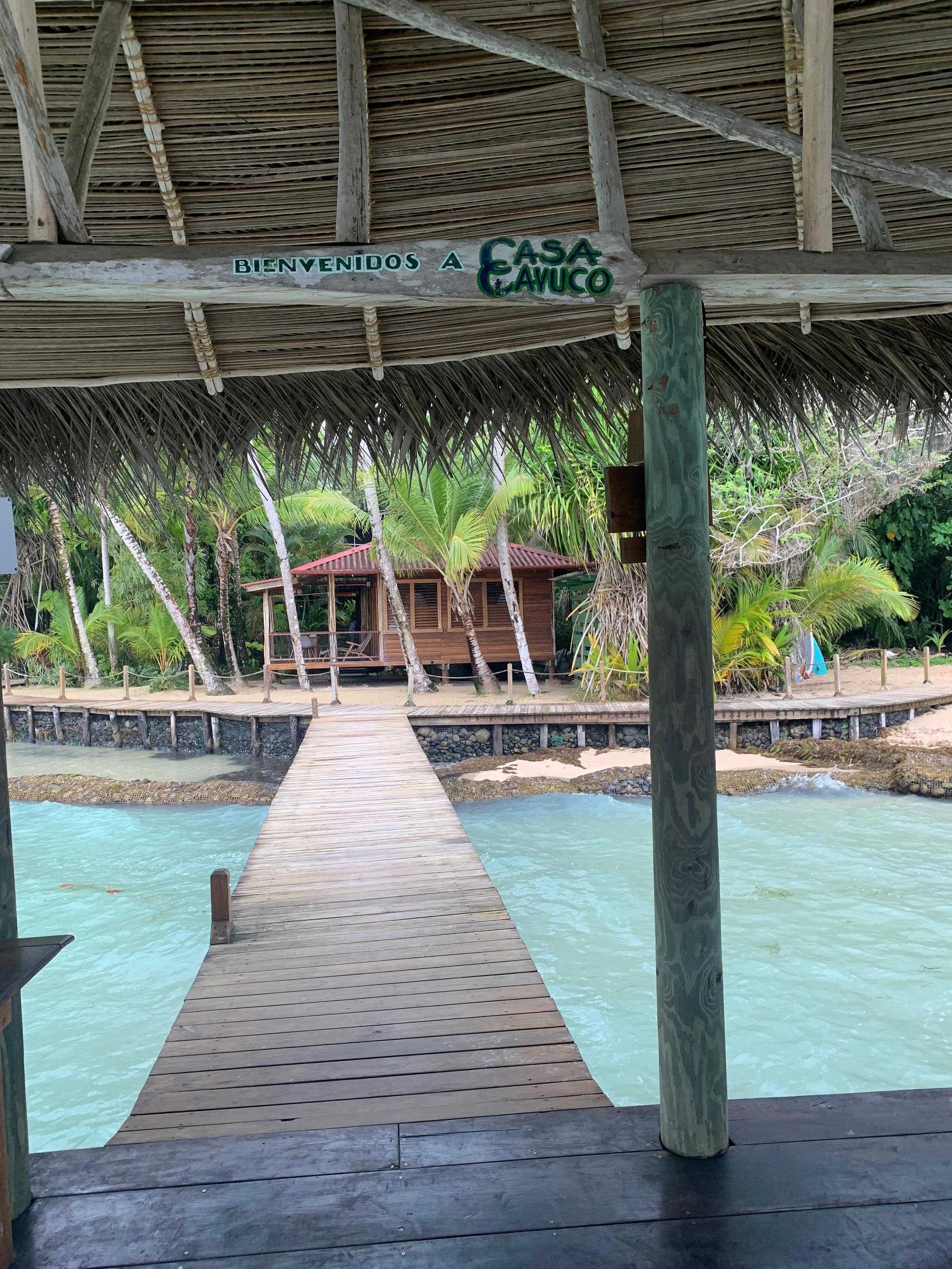
A view of our cabin from Casa Cayuco’s dock
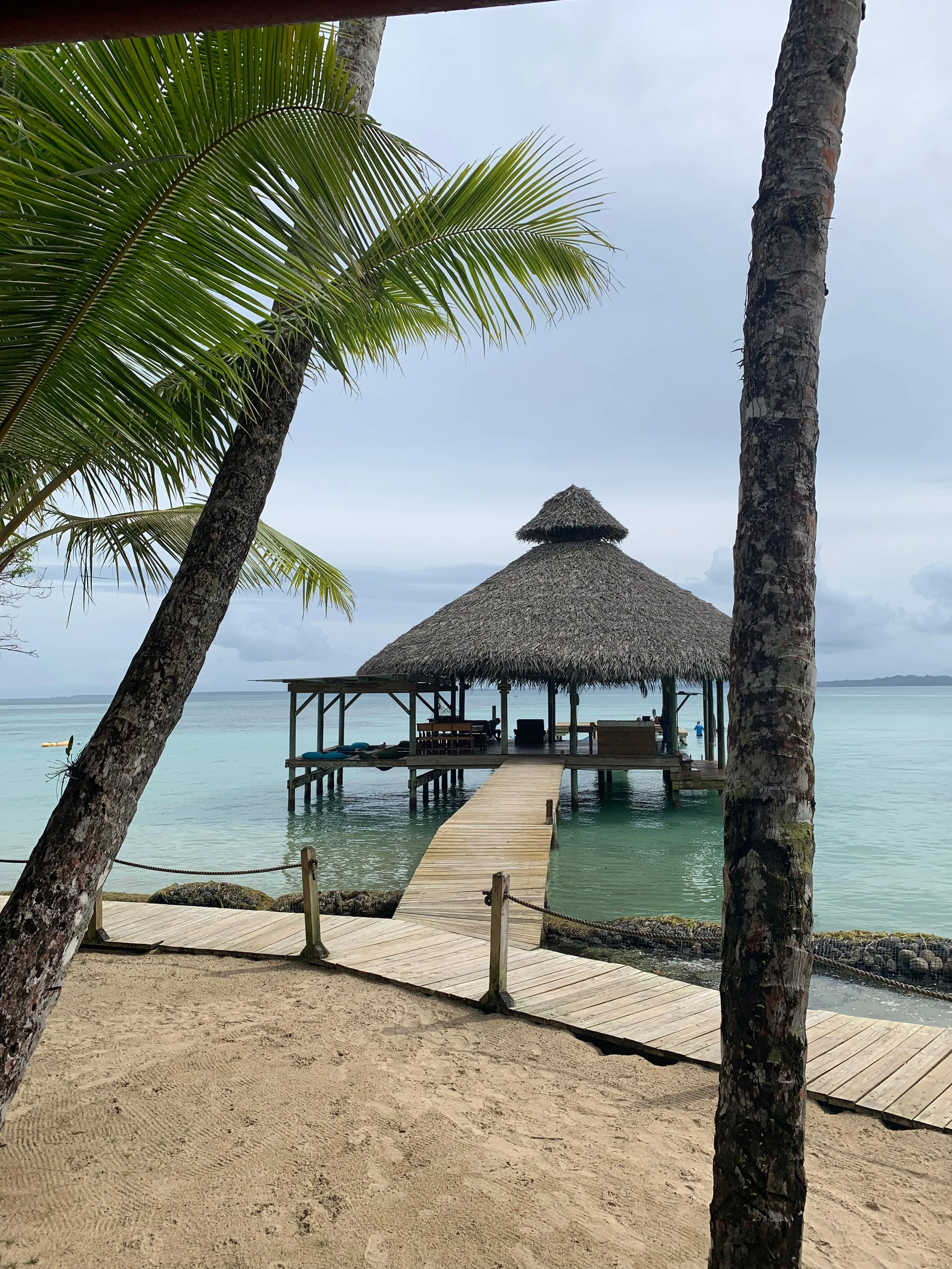
Casa Cayuco’s dock from our cabin
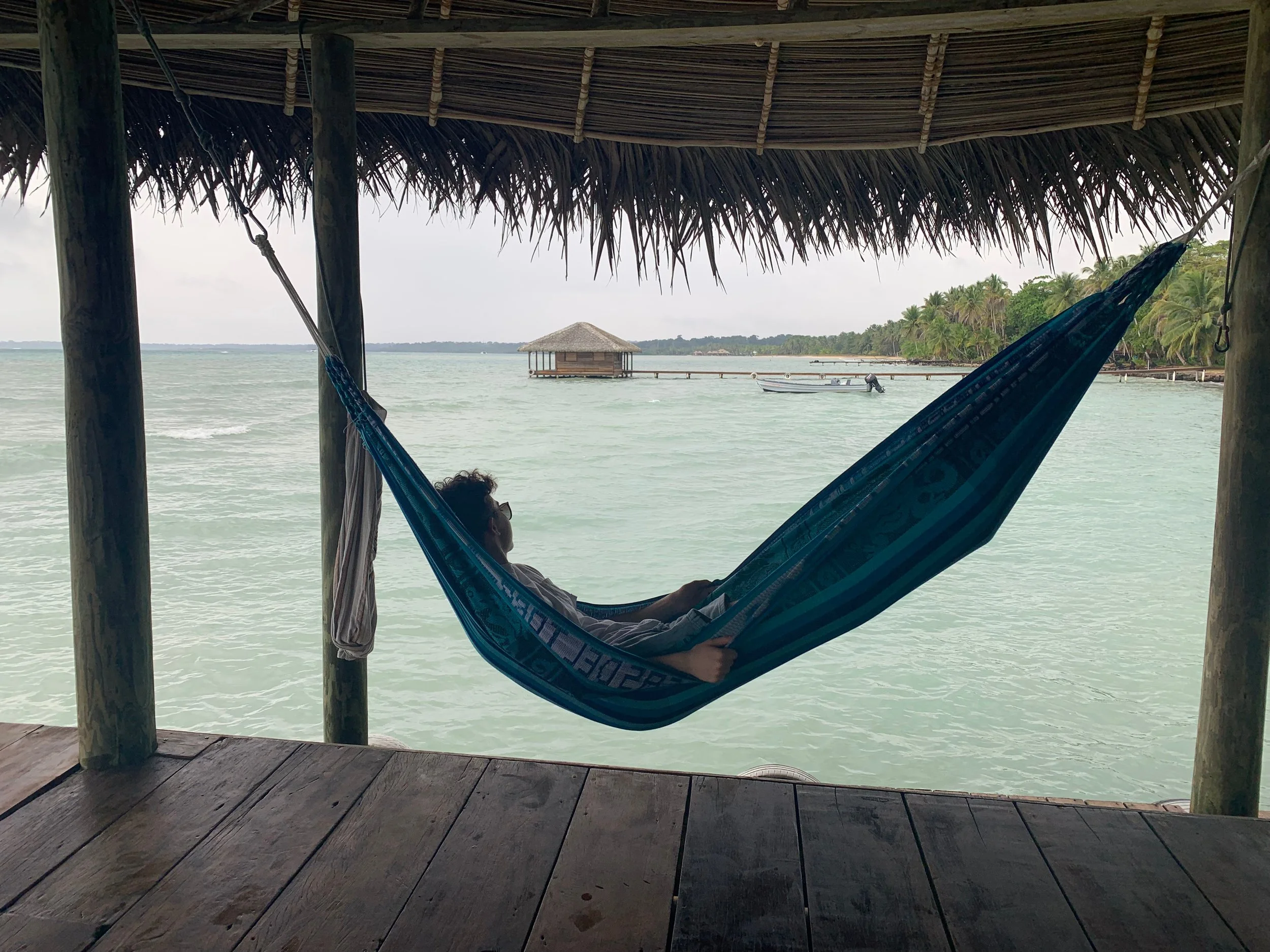
Hammock time
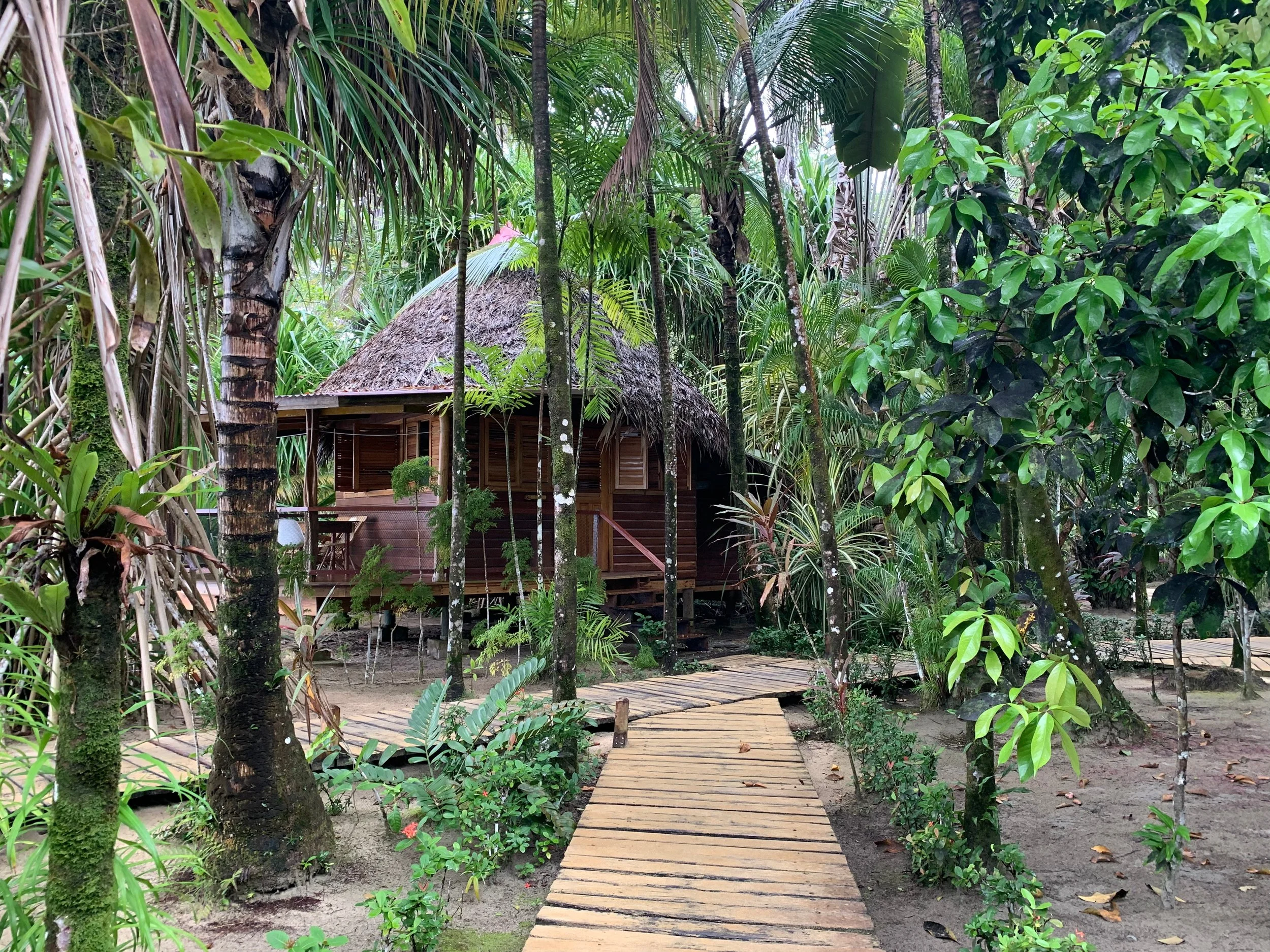
Casa Cayuco’s cabins are scattered in the jungle with walkways built over the sand
We really enjoyed three of our excursions, including our beach trip to the Zapatillos Keys, snorkeling in the mangroves, and visiting Salt Creek village and school. The boys loved meeting and playing soccer with the kids at Salt Creek School, and, as a parent, I really appreciated the opportunity for the kids to interact and connect across language and cultures. We have visited schools in Costa Rica, Belize, Ecuador, Botswana, and Tanzania, and they have been both formative and memorable for my kids.
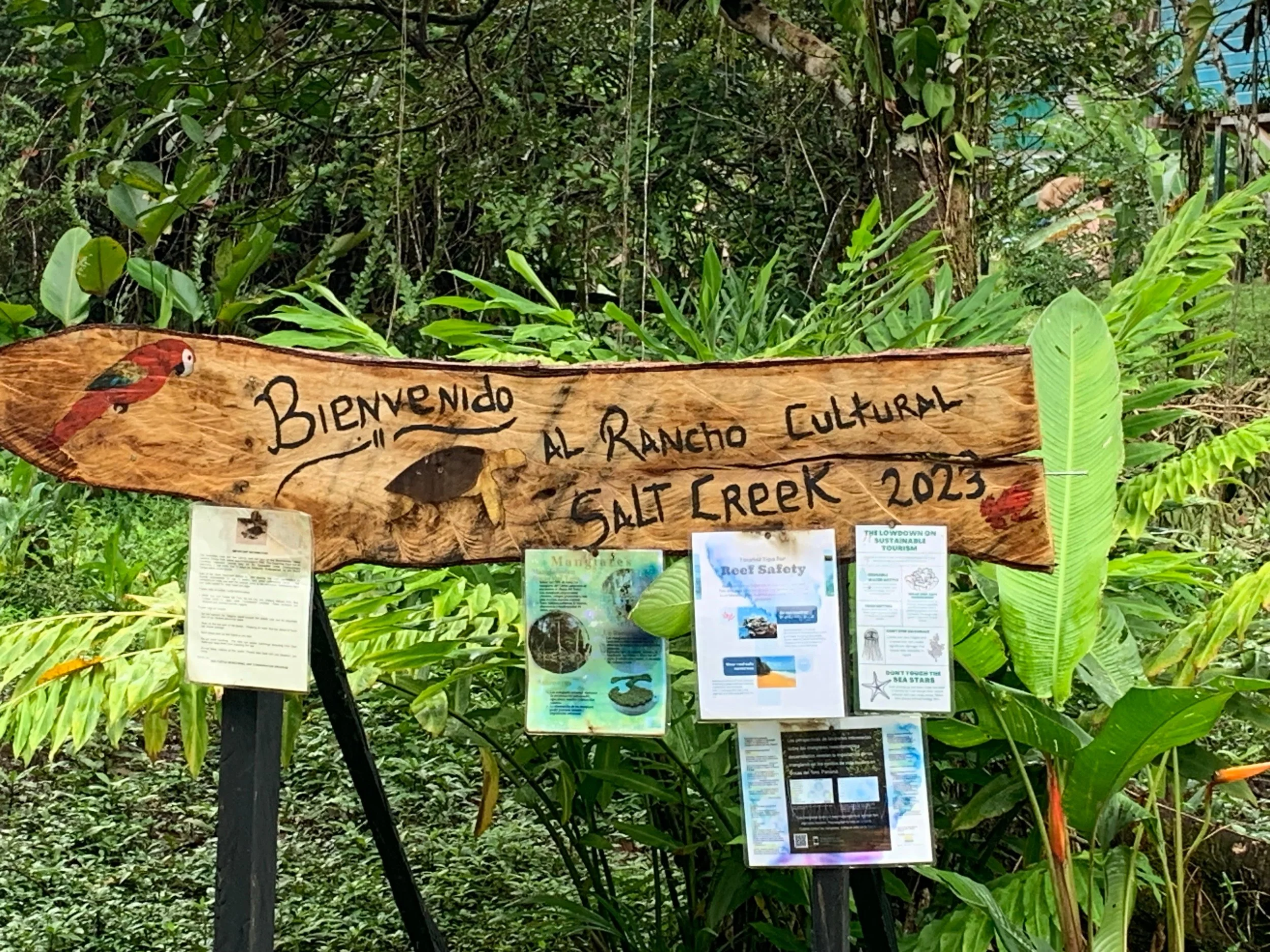
The Salt Creek community’s welcome sign
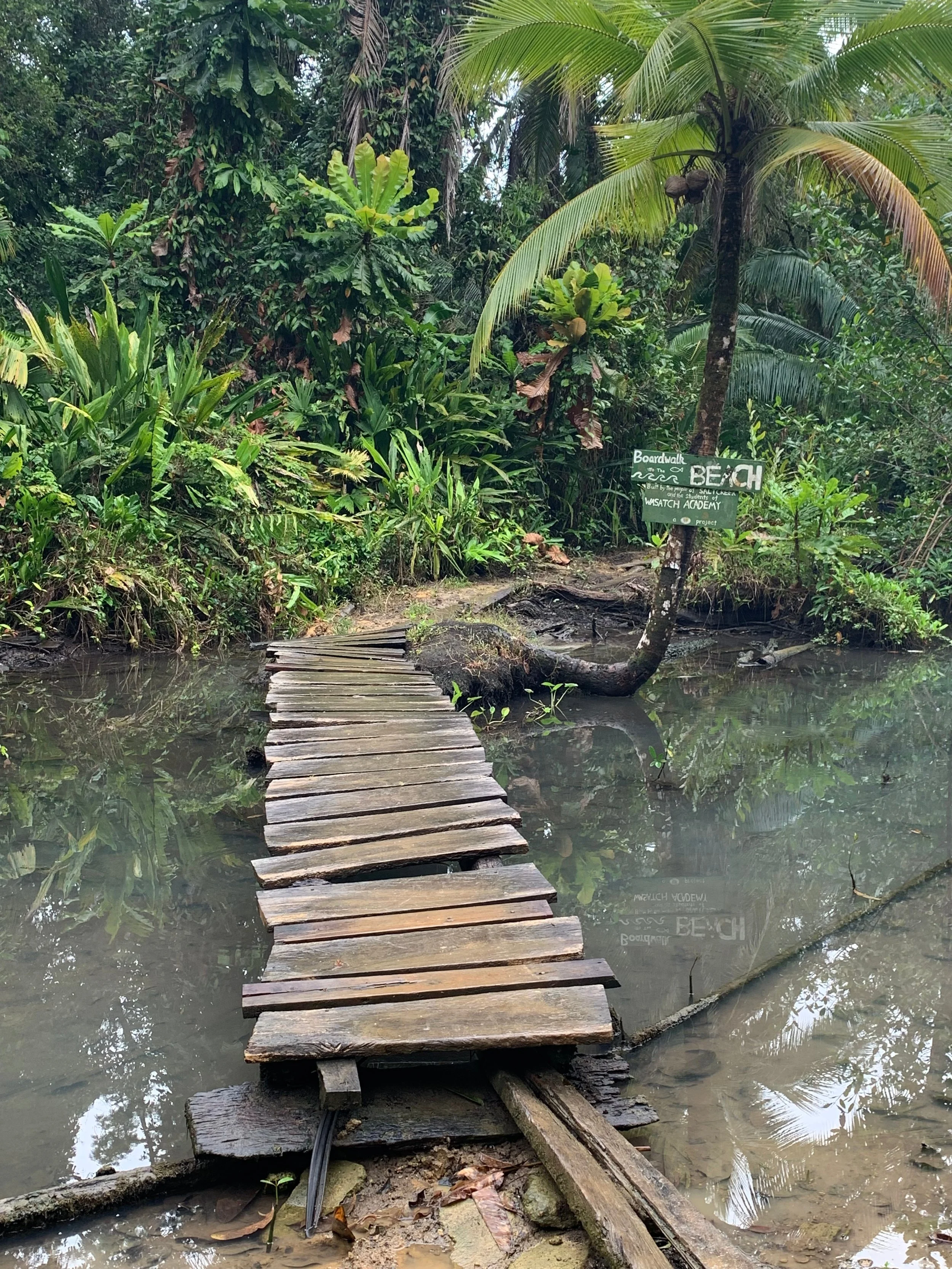
We arrived in Salt Creek by boat through the mangroves
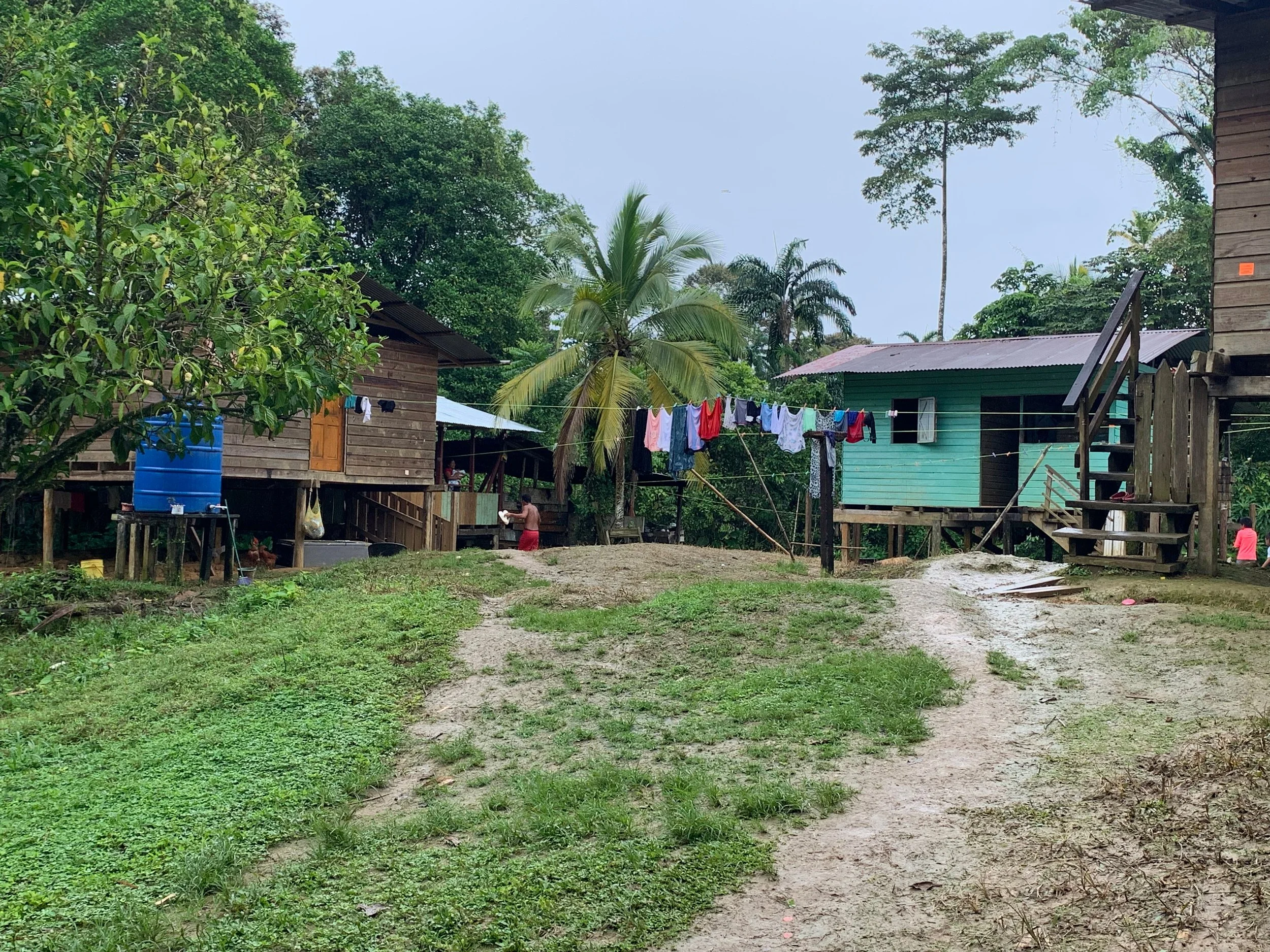
Homes in Salt Creek
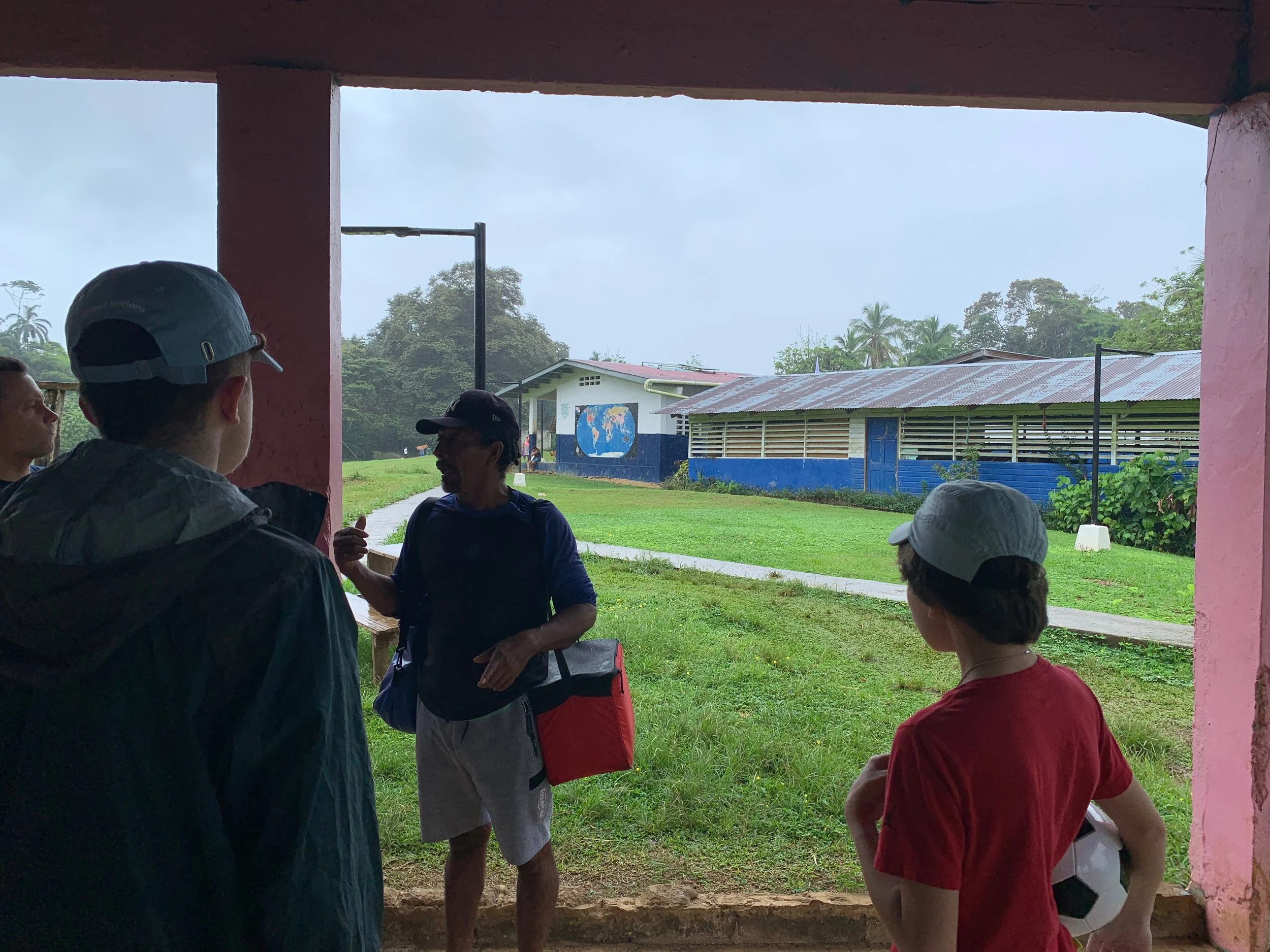
Learning about Salt Creek School
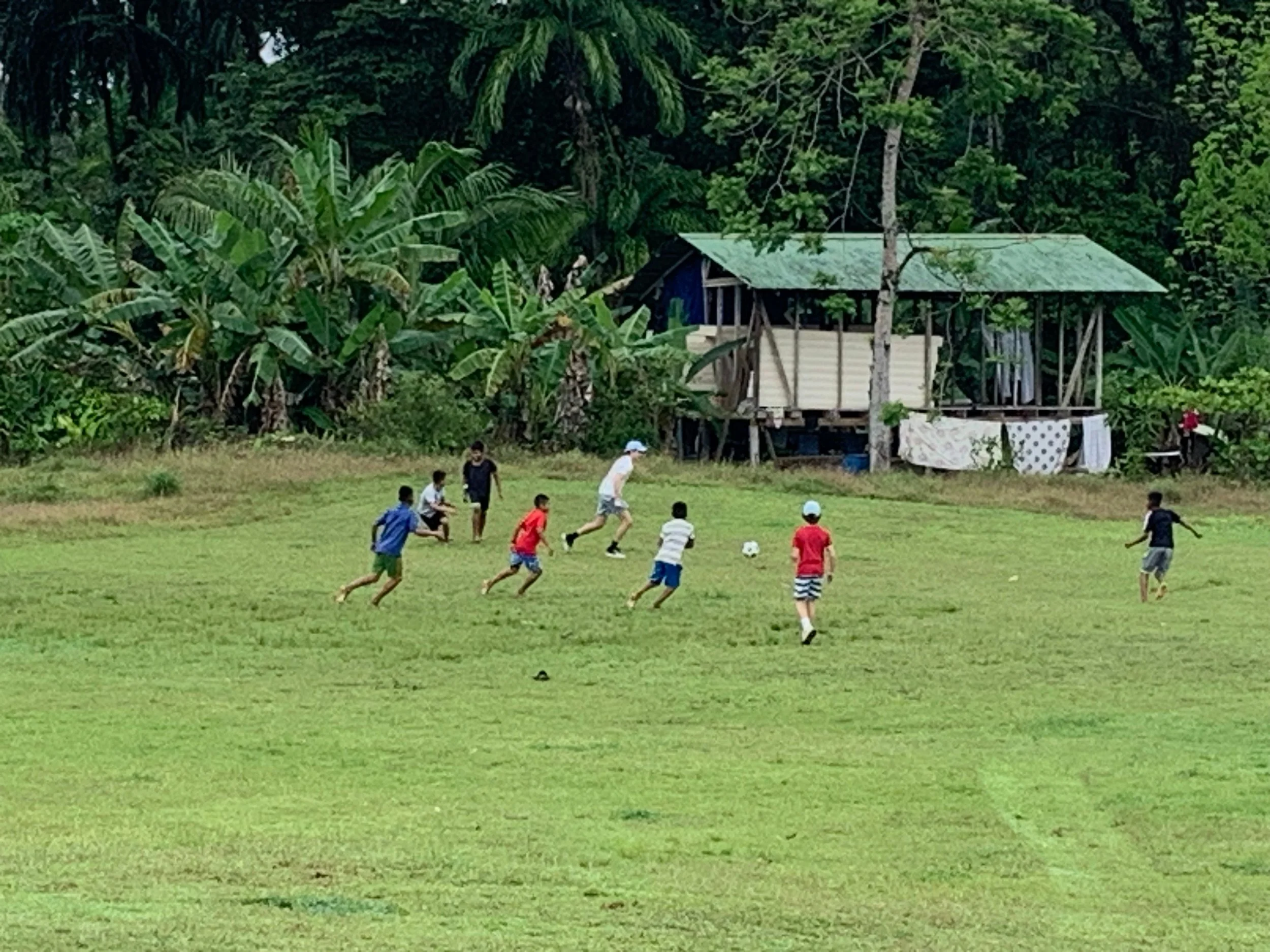
The boys playing soccer with some kids from Salt Creek School
Casa Cayuco’s guides were great, and we really enjoyed their company. The guides were especially good during the mangrove snorkeling, showing us creatures we never would have found on our own. The only trip I did not enjoy was the one to Monkey Island. If you’ve never seen monkeys in the wild, I suppose it could be fun. But it felt more like a zoo to us. The island’s owner claims she is rehabilitating injured or orphaned monkeys, but when she told stories of how she got the monkeys, it sounded a little Curious-George-like to me, e.g., a monkey hopped on her kayak and she paddled off with it. Casa Cayuco offers other excursions, but you cannot necessarily choose the ones you want - they tell you which ones they are offering on any given day, and they became repetitive.
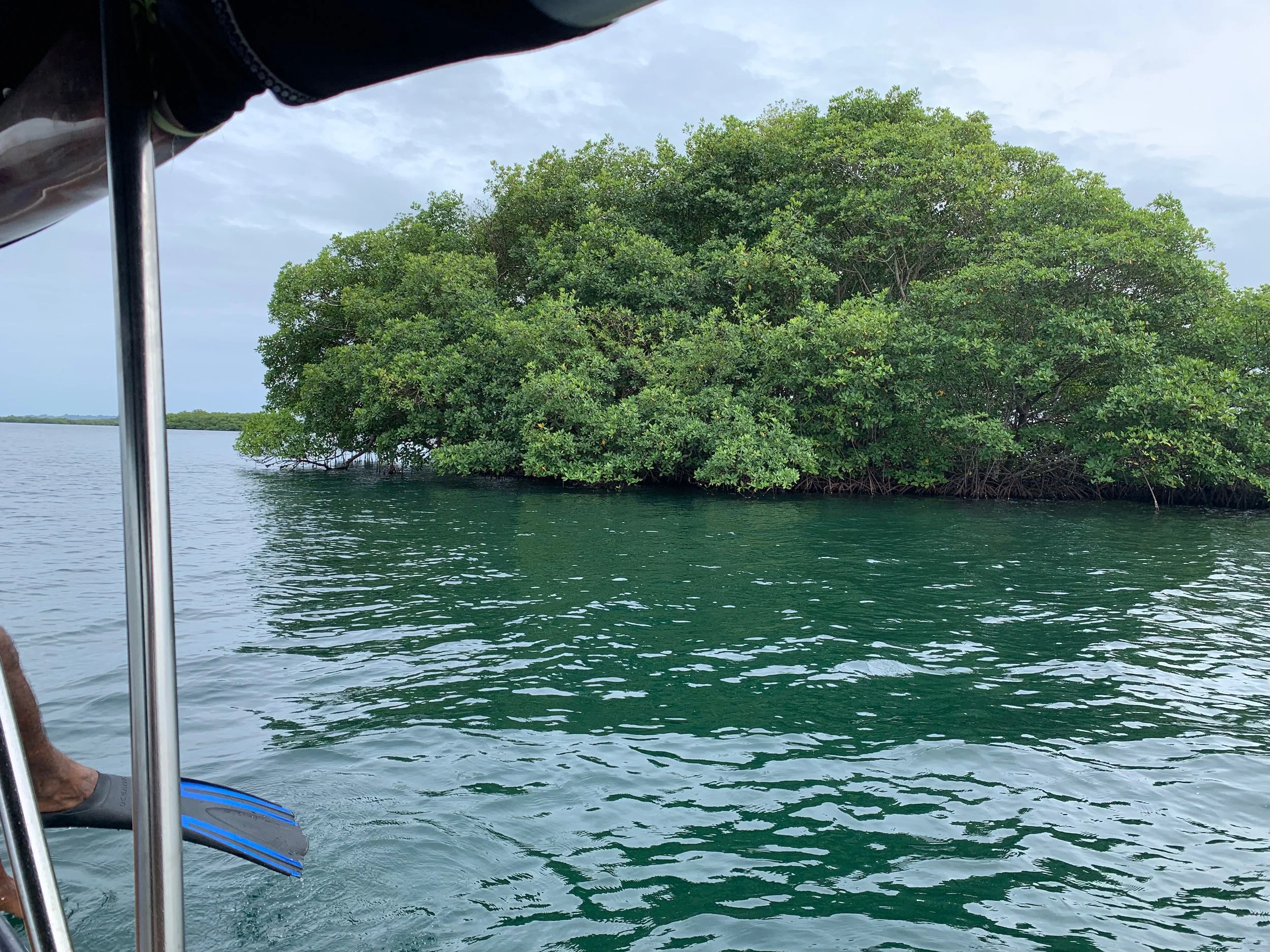
Snorkeling in the mangroves was fascinating - so different from reef snorkeling!
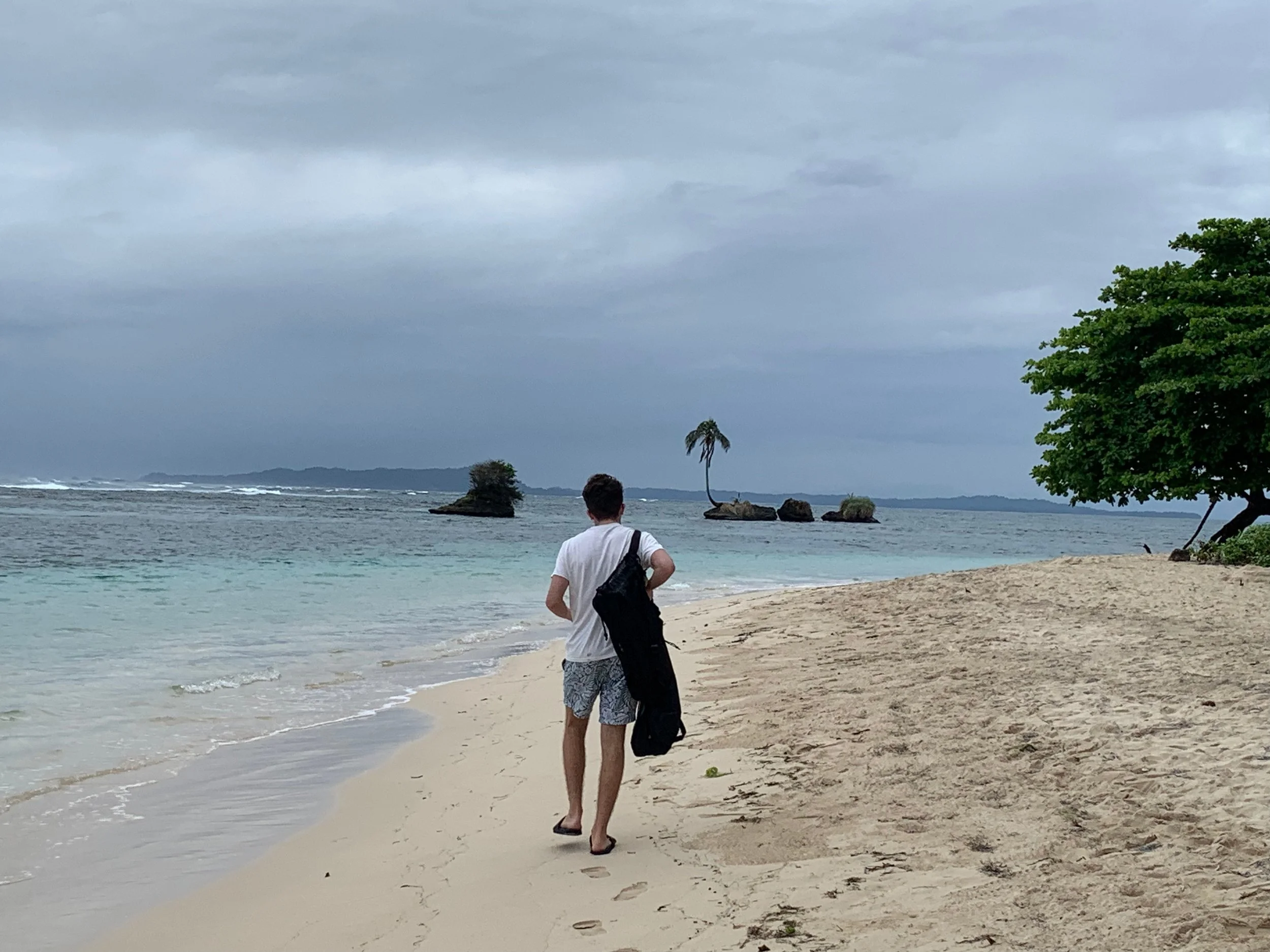
We had Isla Zapatillas to ourselves
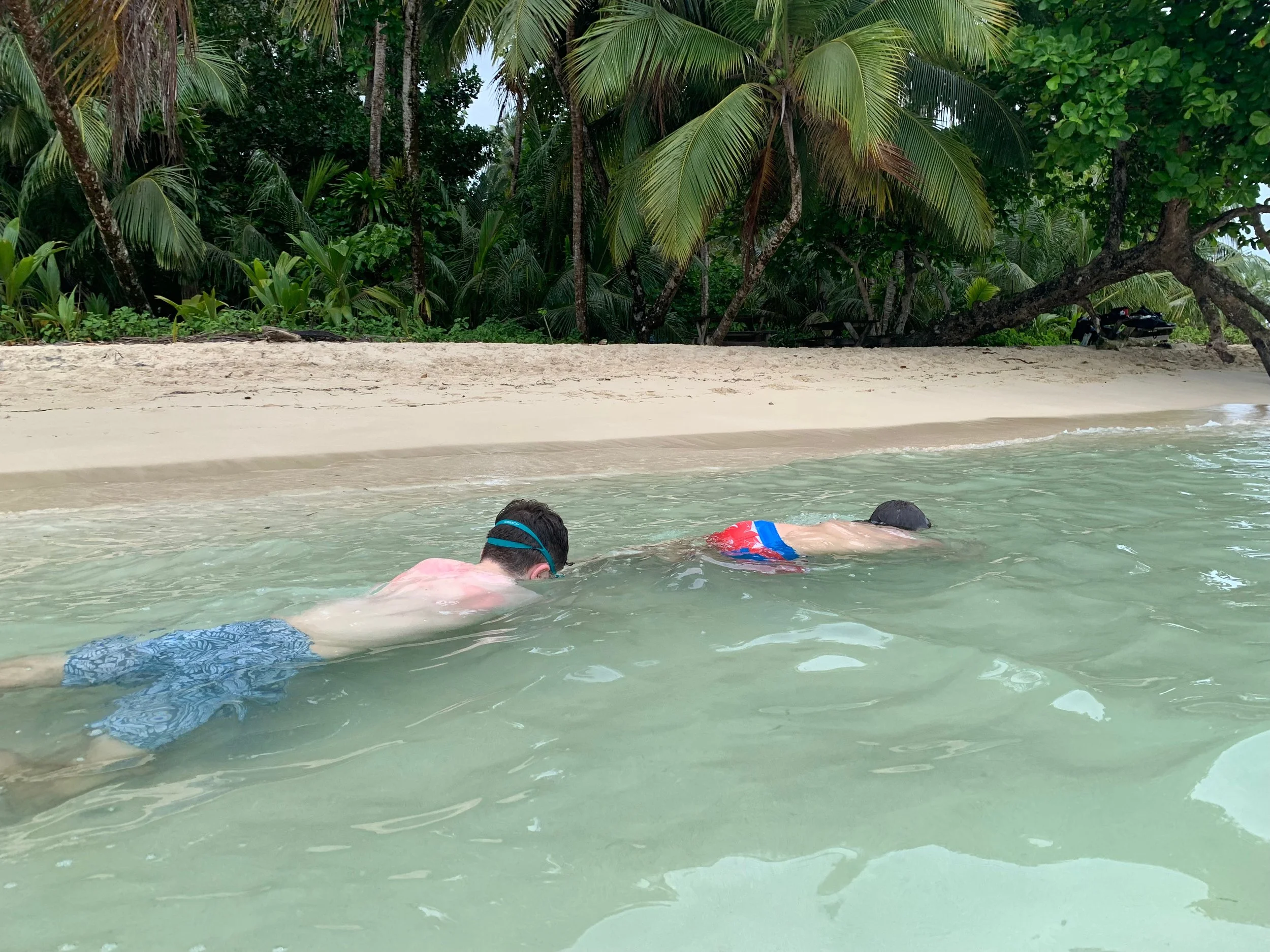
Snorkeling at Isla Zapatillas
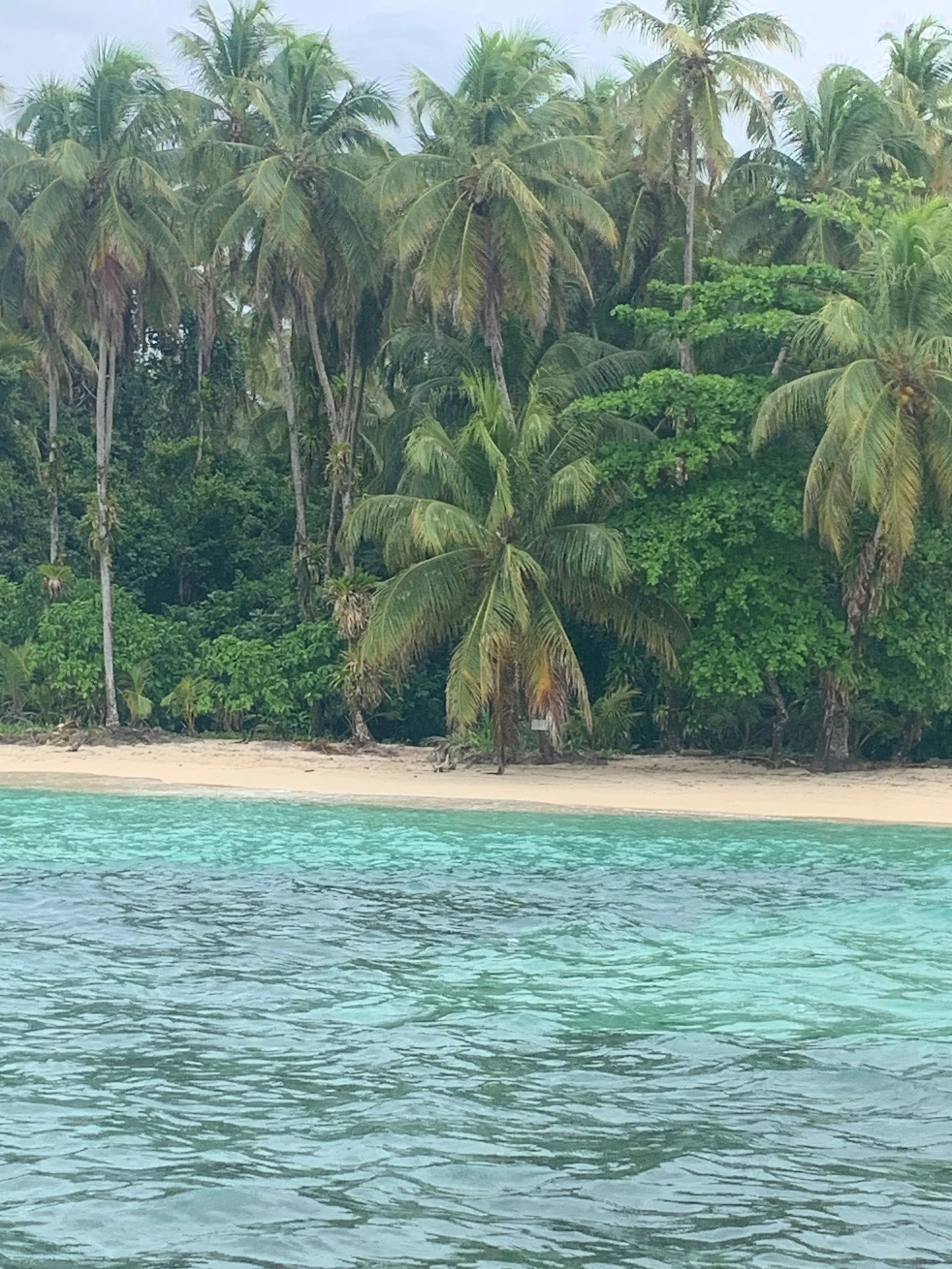
Arriving at Isla Zapatillas
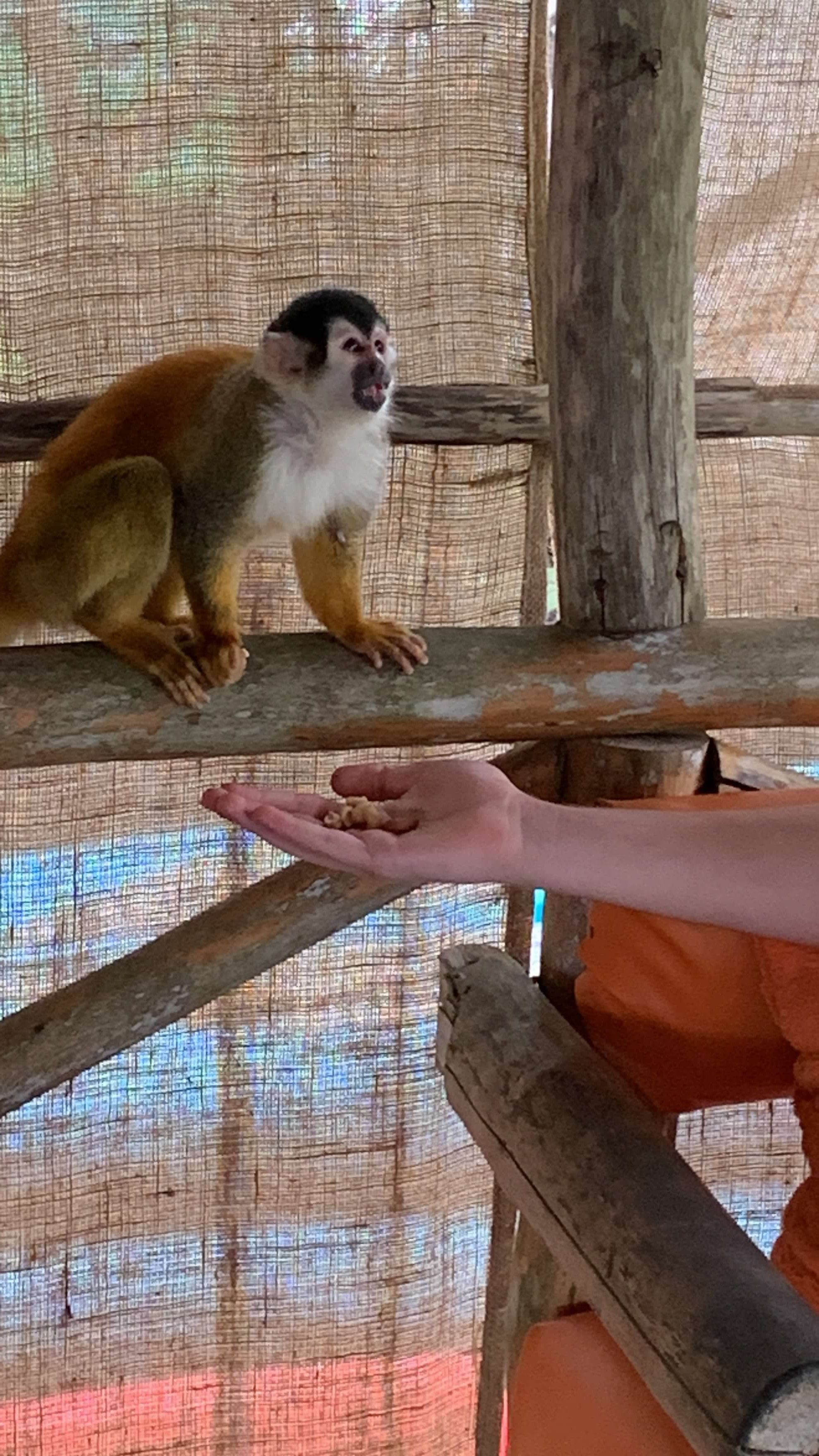
Monkey Island was strange
We also enjoyed using the kayaks and paddle boards provided by Casa Cayuco. I recommended they have more beach and water toys, as we did get a little bit bored. Partly, this was the fault of the weather, as it was overcast and rainy for all but our final day. When the skies cleared and the sun shone, it did feel like a different resort. The formerly murky waist-high water was almost sparkling.
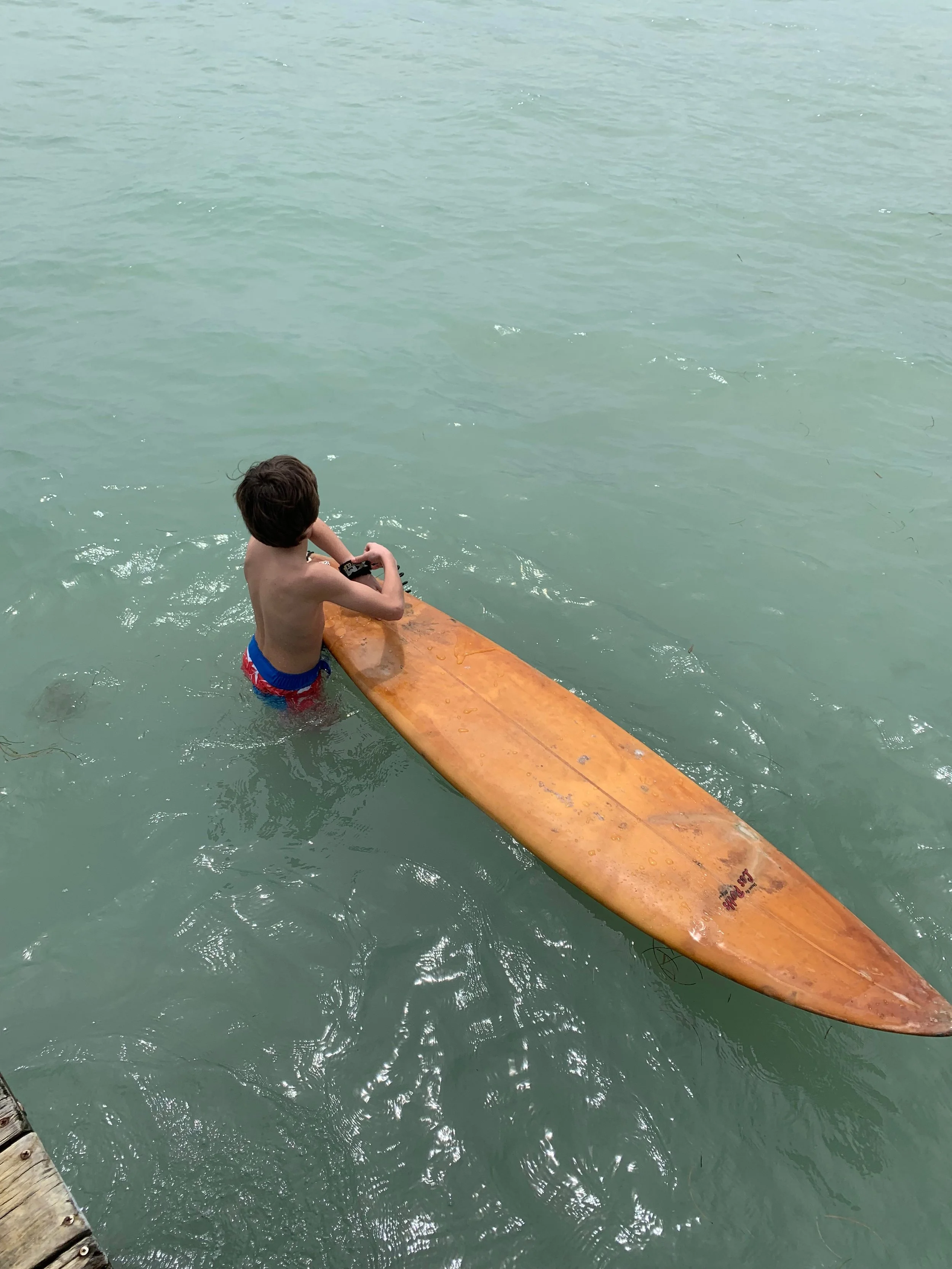
Waiting patiently to catch a wave
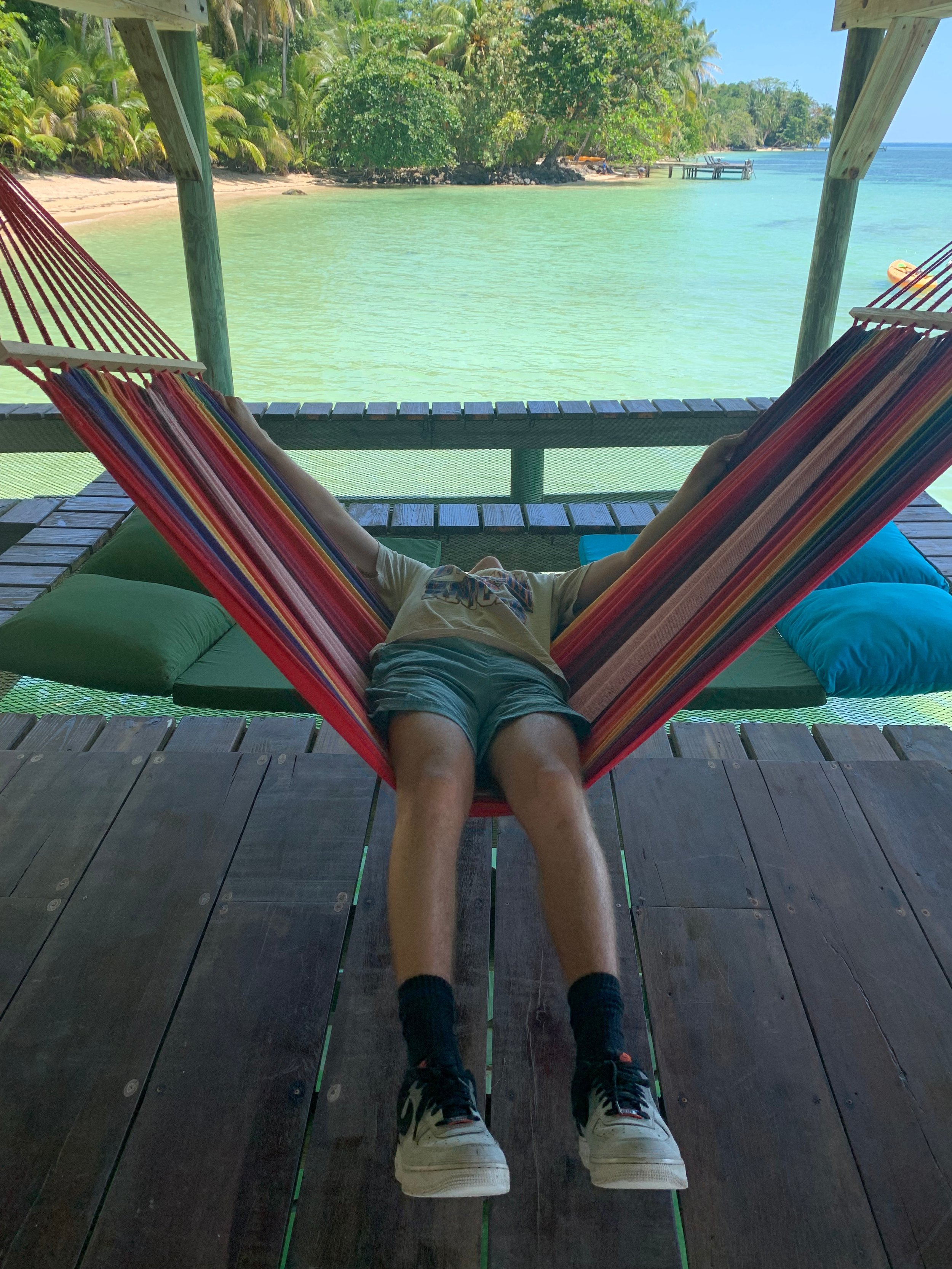
One last hammock flop before heading to the airport
It pains me to give Casa Cayuco less than stellar marks because the staff is so kind. Perhaps if my expectations had been lower, I would have felt differently about the lodge. When we were leaving to head back to Panama City, the other guests were envious and wished their departure day was sooner, if that gives you a sense of how universally the disappointment was felt. If you a traveler who wants a basic, ecolodge stay in a quiet spot on the sea, you may love Casa Cayuco as much as our friends who recommended the lodge to us did. Just don’t go expecting a luxury stay. If you want a luxury ecolodge experience, click here to read about the two lodges we stayed at in the Osa Peninsula in Costa Rica. I did keep my eyes open during our beach walks and boat excursions for a higher-end property, but did not see any place compelling enough to want to return to the Bocas del Toro. If the Bocas del Toro is on your travel wish list, research accommodation choices carefully. Recently, this adults-only Bocas del Toro resort was rated highly by readers of Condé Nast Traveler.
Quisque iaculis facilisis lacinia. Mauris euismod pellentesque tellus sit amet mollis.